THE POSTS MOSTLY BY GEOGRAPHICAL DISTRIBUTION

THE POSTS MOSTLY BY GEOGRAPHICAL DISTRIBUTION

.

.
Boston artist Steve Mills - realistic painting

Tuesday, July 6, 2010

Afghanistan Sitrep


July 1, 2010

What Now?

Afghanistan Sitrep

By WILLIAM R. POLK
On June 24, the International Herald Tribune published an editorial from its parent, The New York Times, entitled “Obama’s Decision.” Both the attribution – printing in the two newspapers which ensures that the editorial will reach both directly and through subsidiary reprinting almost every “decision maker” in the world – and the date – just before the appointment of David Petraeus to succeed Stanley McChrystal – are significant. They could have suggested a momentary lull in which basic questions on the Afghan war might have been reconsidered.
That did not happen. The President made clear his belief that the strategy of the war was sound and his commitment to continue it even if the general responsible for it had to be changed.
The editorial sounded a different note arising from the events surrounding the fall of General McChrystal: Mr. Obama, said The Times, “must order all of his top advisers to stop their sniping and maneuvering” and come up with a coherent political and military plan for driving back the Taliban and building a minimally effective Afghan government.”
In short, Mr. Obama must get his team together and evolve a plan.
Unfortunately, the task he faces is not that simple.
First, consider the “team.” It has two major components, the military officers whom McChrystal gathered in Kabul. As they made clear in the Rolling Stone interview, they think of themselves as “Team America” and hold in contempt everyone else. Those who don’t fully subscribe to their approach to the war are unpatriotic, stupid or cowardly. Those officers are not alone. Agreeing with them is apparently now a large part of the professional military establishment. They are the junior officers whom David Petraeus and Stanley McChrystal have selected, promoted and with whom they take their stand..
The other “component” is not a group but many groups with different agendas and constituencies. The most crucial for my purposes here are the advisers to the President; they were dismissed out of hand as “the wimps in the White House.” Most, but not all, were civilians. Other senior military officers, now retired, who are not part of “Team America” and its adherents were also disparaged. Famously, General Jim Jones, the director of the National Security Council staff, was called a “clown.”
These were the comments that forced Mr. Obama’s hand and were what the press latched upon to explain the events. But many missed the point that McChrystal had just a few days before his dismissal written a devastating report on his mission. Confidential copies of it were obtained by the London newspaper, The Independent on Sunday, which published it today, but of course the President had seen it earlier. Essentially, its message boiled down to failure.
McChrystal pointed out that he faced a “resilient and growing insurgency,” with too few troops and expected no progress in the coming six months. Despite expenditures of at least $7 billion a month, his politico-military strategy wasn’t working. Within weeks of the “victory” over the Taliban in the agricultural district of Marja, the Taliban were back and the box full of government he had announced proved to be nearly empty. As the expression went in the days of the Vietnam war, whatever happened during the day, the guerrillas “owned the night.” As he described it, Marja was the “bleeding ulcer” of the American campaign.
Behind McChrystal’s words, the figures were even more devastating: Marja, despite the descriptions in the press is not a town, much less a city; it is a hundred or so square miles of farm land with dispersed hamlets in which about 35,000 people live and work. Into that small and lightly populated area, McChrystal poured some 15,000 troops, and they failed to secure it.
To appreciate what those figures mean, consider them in context of Petraeus’s counterinsurgency theory, on which McChrystal was basing his strategy. As he had explained it, Marja should be taken, secured and held. Then an administration – McChrystal’s “government in a box” -- should be imposed upon it. Despite all the hoopla about the brilliant new strategy, it was hardly new. In fact it was a replay of the strategy the French General Lyautey called the tache d’huile (the oil spot) and applied in Indochina over a century ago. We also tried it in Vietnam, renaming it the “ink spot.” The hope was that the “spot,” once fixed on the Marja, would smudge into adjoining areas and so eventually spread across the country. Clear and simple, but unfortunately, like so much in counterinsurgency theory, it never seemed to work.
Petraeus’s counterinsurgency theory also illuminated how to create the “spot.” What was required was a commitment of forces in proportion to native population size. Various numbers have been put forth but a common number is about one soldier for each 50 inhabitants. Marja was the area chosen for the “spot.” The people living there, after all, were farmers, wedded to the land, and so should be more tractable than the wild warriors along the tribal frontier. Moreover, it was the place where the first significant American aid program, the Helmand Valley Authority, had been undertaken in the late 1950s. So, if an area were to be favorable to Americans, it ought to be Marja. But, to take no chances, General McChrystal decided to employ overwhelming force. So, what is particularly stunning about the failure in Marja is that the force applied was not the counterinsurgency model of 1 soldier for each 50 inhabitants but nearly 1 soldier for each 2 inhabitants.
If these numbers were projected to the planned offensive in the much larger city of Kandahar, which has a population of nearly 500,000, they become impossibly large. Such an attack would require at least four times as many US and NATO as in Marja. That is virtually the entire fighting force and what little control over Marja and most other areas, perhaps even the capital, Kabul, that now exists would have to be given up or else large numbers of additional American troops would have to be engaged. Moreover, in response to such an attack, it would be possible for the insurgents also to redeploy so the numbers would again increase.
The more fundamental question, which needs to be addressed, is why didn’t this relatively massive introduction of troops with awesome and overwhelming fire power succeed. Just a few days before he was fired, as I have mentioned, General McChrystal posed, but could not answer, that question. I hope President Obama is also pondering it.
For those who read history, the answer is evident. But, as I have quoted in my book Understanding Iraq, the great German philosopher, Georg Willhelm Friedrich Hegel, despaired that “Peoples and governments never have learned anything from history or acted on principles deduced from it” and, therefore, as the American philosopher George Santayana warned us, not having learned from history, we are doomed to repeat it. Indeed, it seems that each generation of Americans has to start all over again to find the answers. Who among our leaders and certainly among college students now really remembers Vietnam? So, consider these simple facts:
The first fact, whether we like it or not, is that nearly everyone in the world has a deep aversion to foreigners on his land. As far as we know, this feeling goes back to the very beginning of our species because we are territorial animals. Dedication to the protection of homeland permeates history. And the sentiment has never died out. Today we call it nationalism. Nationalism in various guises is the most powerful political idea of our times. Protecting land, culture, religion and people from foreigners is the central issue in insurgency. The former head of the Pakistani intelligence service, who has had unparallelled experience with the Taliban over many years, advised us that we should open our eyes to seeing the Afghan insurgents as they see themselves: “They are freedom fighters fighting for their country and fighting for their faith.” We agreed when they were fighting the Russians; now, when many of the same people are fighting us, we see them only as terrorists. That label does not help us understand why they are fighting.
Instead of asking why they are fighting, counterinsurgents think they can overcome aversion to foreign invaders by “renting” the natives. In Marja, we not only put in a large military contingent but, as Rajiv Chandrasekaran reported this month in The Washington Post, we offered to employ virtually the entire adult population, some 10,000 people. Unquestionably such efforts do persuade some of the people for some of the time. But not all or permanently. In Marja, only 1,200 people signed up for the jobs we offered.
Why so few? After all, the Afghans, as I wrote in an earlier article, have suffered through virtually continuous war for thirty years. Many are wounded or sick, with some even on the brink of starvation. More than one in three subsists on the equivalent of less than 45 cents a day, almost one in two lives below the poverty line and more than one in two preschool children is stunted because of malnutrition. They are the lucky ones; one in five dies before the age of 5. Obviously, the Afghans need help, so we think they should welcome our efforts to aid them. But Marja shows that they do not. Nation-wide, independent observers have found that attitude is common: most do not want us there, even giving them aid. And even those who do are fairly easily dissuaded by the insurgents.

Threats or attacks by the insurgents have brought them into our gunsights. In Afghanistan, as in Vietnam, we have tried to so weaken the insurgents that they cannot effectively block our programs. Our “body counts” in Vietnam showed that we killed off the entire Viet Minh several times over and today we are told that the ranks of the Taliban have been severely depleted. But, because the motivation that energized the first group of insurgents is widely shared, and is usually intensified by foreign military action, which by its nature is regarded by many of the natives as unjustified and brutal, new insurgents as well as supporters of the temporarily evicted insurgents will emerge from among the inhabitants of the oil/ink spot. Outsiders may have come in, but, according to US military intelligence about three in four insurgents fight within five miles of their homes. They were “home” and taking up arms within a month in Marja.

Indeed, the campaign may have been, to use that cumbersome locution of governmentese, “counter-productive.” According to the former British counter-terrorism chief and current head of the UN monitoring mission, Richard Barnett, as cited in The Guardian/The Observer last week, “Attempts by British and American forces to expand their control over Afghan territory over the past 12 months have been counter-productive and led to a worsening security situation.”
The second fact is that those insurgents who don’t get killed are the ones who have learned three simple ways to defeat the counterinsurgents.
The first of these ways to defeat counterinsurgents is to use appropriate tactics --never stand and fight. Insurgents can see that their enemies outgun, and usually far out-number, them so they should hit and run -- lay mines, ambush patrols, disrupt logistics but never get caught. Drawing on a Kenyan fable, this has been termed “the war of the flea and the lion.” The flea bites and jumps away. The powerful lion swats, occasionally hits, but eventually tires and moves away. Lions don’t defeat fleas.
The second way insurgents can defeat the counterinsurgent is a form of jujitsu – using his strength against him. His strength is his superiority in weapons. So the insurgent seeks to incite him to use them. Inevitably, caught in the middle, the people – who are after all the “spoil” in insurgency warfare – get hurt. And when they get hurt, they naturally come to hate those who fire the weapons. In Vietnam, insurgents would sometimes enter a “neutral” village, shoot at an American airplane and then steal away. The attacked airplane would call in troops or gunships. The villagers would suffer and would be confirmed in their hatred of the Americans. It was brutal but very effective.
Counterinsurgents think they can avoid this problem by withholding as much as possible of their lethal power. But doing so is very difficult. Their soldiers also get hurt and angry. And they come to hate the locals – wogs, gooks, rag heads, untermenschen – who appear to them dirty, slovenly, corrupt and cowardly. No one can be trusted when even children act as spies or carry bombs. Soldiers make bad neighbors to civilians in the best of circumstances and insurgency is not one of those circumstances. As I have pointed out in my book, The Birth of America, it was the presence of even superbly disciplined British troops in Boston that touched off the American Revolution.
The third way insurgents can defeat invaders is by destroying their local puppets. Ruling another country is, of course, expensive and difficult so foreigners have almost always and everywhere enrolled willing natives to help. In the American Revolution we called those people “the Loyalists.” In Vietnam, they were the government of the South. In Afghanistan they are the “Kabul government.”
So the insurgents regard collaborators -- “Quislings” as we called them in the Second World War -- as their prime target. In America, the colonists threatened, tarred and feathered, lashed, imprisoned, hanged or drove away tens of thousands of the Loyalists. In Vietnam, French police records show that in the 1950s, the Viet Minh virtually wiped out the administration of the southern government, murdering policemen, postmen, judges and other civil servants as well as teachers and doctors. And today in Afghanistan, as Rod Nordland reported in The New York Times on June 10, “The Taliban have been stepping up a campaign of assassinations in recent months against officials and anyone else associated with local government in an attempt to undermine counterinsurgency operations in the south.”
One Afghan told Nordland, “I know many people who are afraid to take jobs with the government or the aid community now. It’s a very effective and very efficient campaign; the armed opposition are using this tool because it works.” Even from a nationalist perspective, this is very rough justice. But many Afghans appear to believe it is both “justice” and Afghan justice.
To validate their actions, the insurgents must themselves supply what the foreigners and their local supporters offer. We have full records of how insurgents did this in Yugoslavia and Greece during the Second World War. The records are not so open for Afghanistan as yet. But, we know from a study by the US Government Accountability Office (GAO) that the Taliban has set up a “widespread paramilitary shadow government…in a majority of Afghanistan’s 34 provinces.”
One of the things these shadow governments do is administer the law. For years, I have read reports contrasting what happens in a government court and a Taliban court. In the government court, cases languish for months or years while bribes are collected. A UN study found earlier this year that officials shake down their fellow citizens for an amount that is nearly a quarter of the country’s gross domestic product. In a Taliban court, there is no bribery and no delay: Islamic law as defined by Afghan custom is immediate. From our point of view, this too is very rough justice, if justice at all, but in insurgencies, people appear willing to put aside the niceties of peaceful life. In our Revolution we did too.
So where are we?
For some years I have been reading every study, poll, government release, press report and assorted other documents I could find. What I see is a decline, accelerated in the last two years, of “security.” In 2009, there were 8,159 “incidents” involving bombs (IEDs), and in the first four months of 2010 there have already been almost half that many. But, more important than “security,” I think, is the widely held belief that America is not moving toward anything that can be considered success. And certainly not on anything like President Obama’s reëlection-related timetable.
I have been taxed with being severe in this judgment, but listen to General McChrystal’s Chief of Operations, Major General Bill Mayville. Having described the war as unwinnable, he said “It’s not going to look like a win, smell like a win or taste like a win. This war is going to end in an argument.” Even his choice of the word “argument” may be unduly optimistic. In Vietnam, the disgraceful scene of the helicopter taking a few people off the roof of our embassy -- while abandoning others of our supporters to the rough justice of the Viet Minh -- is hard to put out of mind.
But, I am astonished to find how many Americans today do manage to put not only the now-distant Vietnam war but also the wars in Iraq and Afghanistan out of their minds. In lecturing around the country, I find little interest among the American public in the growing number of wounded – now over a hundred thousand – or the casualties. Based on informal talks with members of my audiences, I have come to attribute this is to the fact that, whereas in the Vietnam war, our army was made up of draftees who were drawn from our families, today our army, and therefore our casualties, come in high proportion from the disadvantaged, minorities and foreigners. As a man in one lecture I gave in Arizona put it bluntly, “they just aren’t our people.” The pain does not reach most of us. Recent polls show a different view in Europe. Some 72% of the citizens of our principal ally, Great Britain, want their troops home immediately and 62% of the Germans agree.
Surprisingly, the vast expenditure of money on the war does not seem, at least yet, to worry Americans either. As a people, we seem far more ready to spend money on the war than on our own health, housing, jobs and education.
But, worry about the course the war is taking appears strongest in precisely those places where it is most crucial – the ruling circles of Afghanistan. Recognition of this was apparently what motivated Afghan President Hamid Karzai at least to talk about a new peace initiative: he must see that not only his regime but his life is in danger. He must know that the war is being lost.
So what can America do?
We can begin by being realistic. We were sold a phony policy in counterinsurgency -- one that essentially tried to substitute technique for politics, enthusiasm for wisdom, money for knowledge. As I have shown in my book on insurgency, terrorism and guerrilla war, Violent Politics, there is no record that counterinsurgency ever worked anywhere, and it is certainly not working now in Afghanistan. The neoconservatives also sold the Bush administration on the quixotic idea of “regime change.” Whole cultures and the regimes they embody are not phantoms to be whisked away, overthrown, replaced by foreign mandate. Trying to do so may be quixotic, but we should remember what Cervantes tells us the real windmill did to Don Quixote.
But, can we just “cut and run?” That question is meant to turn off intelligent analysis. So the proper answer to it is ‘No, but unless we come to a realistic policy, we are likely to be forced eventually to do something like our disgraceful exit from Vietnam. Therefore, let us think carefully and move prudently before it is too late.‘
So what should be included in a realistic policy?
The first thing is to go beyond merely saying that a solution may ultimately and under certain circumstances involve negotiation to actually working to bring it about. Astute commentators have pointed up the obvious: we have opposed negotiation at every opportunity and still do so. We complain that we don’t think the Taliban now want to negotiate. Were I Mullah Umar, I would not either.
Why not? Is it just because he is a bad man? Or a fool? Or because he is driven by a hatred of freedom and democracy? Otherwise sober and intelligent people have adduced each of these. They don’t get us very far. So let us examine the “negotiating climate.”
We have repeatedly said that we want to bloody the insurgents to make them more amenable to our terms. So our concentration has been, and still is, on killing enough of them to weaken their movement. Suppose we manage to do that, what do we then offer?
One proposal under discussion is “reintegration,” which the US favors. Under this rubric, we have said that we are willing to forgive those low-level Taliban footsoldiers who defect. Even more, we have espoused a new order for them in the “Afghan Peace and Reintegration Plan.” As Joshua Partlow summarized in The Washington Post, the defector who renounces violence and promises to support the constitution is then set out on a trajectory that he is bound to regard as humiliating: first, he must be fingerprinted and given a retinal scan; then he must get his fellow tribesmen to vouch for his sincerity. Next he must submit to a course in Islam given by an appointee of the government. Because he is likely to be at least a graduate of a religious school, and may be a man of religion himself, this is no mean psychological hurdle. But, never fear, if he does, there is a pay-off: As Jon Boon reported in The Guardian, he will be offered a manual job in such things as carpet-weaving. In Afghanistan, that is a task for children. There is not a great deal of incentive in this plan. One is tempted to ask: did those who designed it want it to fail?
The other proposal, which America opposes, is aimed at more senior insurgents. “Reconciliation” holds out only the prospect of eventual but limited participation in the existing Karzai government for those judged innocent of any serious crime. Excluded, of course, are the commanders. Again think back to Vietnam: could anyone have seriously thought that the Viet Minh would have accepted a minor role in the Saigon government. Particularly when they thought they were winning. And today, are the terms offered in this proposal likely to be even vaguely attractive to the Taliban? It is hard to imagine.
But, if they are not acceptable, why can’t these proposals at least be discussed? Under discussion they might be modified in ways that would make them acceptable. The answer is a wonderful example of “Catch-22.”
The “22nd catch” is that American military command maintains a secret list of insurgents who can be shot on sight. Because the list is secret no Talib can know if he is on the list. So, he is apt to suspect that the offer of negotiation is really a trap. As Steve Coll pointed out in a perceptive article in The New Yorker, even President Karzai is “powerless to offer the Taliban a secure place to negotiate.” It is very hard to negotiate with anyone when you are trying to kill him.
Moreover, Coll identified a joker in the American strategic hand. Presumably, Mullah Umar and his comrades will have spotted it too: “Whether talks succeed or fail,” Coll points out, “the very act of opening serious negotiations could touch off divisions and confusion within the Taliban leadership.”
Thus, if we are honest with ourselves, we can understand at least part of what makes the Taliban reluctant to deal with us or our Afghan proxy. We don’t start with a hand outstretched, as President Charles DeGaulle did with his October 1958 proclamation of the “Peace of the Brave,” in a move to start the process of ending the Algerian war. We start with a hand hidden behind our back that may contain at least a handcuff and perhaps a gun. It will take time and effort to change these appreciations. That process can happen only if there is a change in the reality of our policy.
President Obama has said that a change in our policy is not in the cards. So is there another way that negotiations might be begun?
This might be the place where Pakistan and/or other neighboring countries, including Iran, could be helpful. We are told that we should not trust Pakistan because it has its own (not our) policy toward Afghanistan. Of course it has. As I have pointed out elsewhere, the Khyber Pass between Pakistan and Afghanistan is about as close to Islamabad as Hartford is to New York. And the two countries share millions of Pashtuns as their citizens. To imagine that Pakistan does not and should not have an Afghan policy is criminal naïveté. But that it could play a useful role is surely evident.
Iran is now our favorite whipping boy. We are furious with it and it is fearful of us. I won’t dilate on that dangerous situation here as I have dealt with it in length in my book Understanding Iran. Let us just say, it is doubtful that the Iranians would want to do us any favors.
But we should keep in mind two things: the one is that an end to the war in Afghanistan would be to the national interest of Iran as meetings between Karzai and Ahmadinejad have already made clear. So apart from their feelings about America, the Iranians might play a useful role in Afghanistan. The second is a precedent: Iran actually has furthered American interests in Afghanistan in the past. At a critical point, it helped us to overcome in the Taliban in the Western, mainly Shia Muslim, area around Heart. Apart from these ventures, Iran also deployed a significant part of its army and police force to try to interdict the drug traffic. Since it is Afghanistan’s neighbor, we cannot exclude it from Afghan affairs. And, of course, if we could work out even a minimal accommodation with Iran, it could be a major force for peace in Afghanistan.
So what is really up for negotiation with the Taliban?
Apart from timetables, reparations, further aid, and such technicalities, the core issue is the internal social/political/religious balance of the country -- not the longevity or composition of the Karzai government.
It isn’t only that the Karzai government is corrupt, weak and almost universally hated – all of which is true – but that its inner circle and hangers-on have already begun to jump ship. With their hands deep in our pockets – as a recent Congressional study (“Warlord, Inc.) documented for just one activity, road transport, and as others have charged for years in virtually every other area -- and in the pockets of their poorer citizens, whom they fleece with apparent abandonment, they are moving hundreds of millions of dollars out of the country and, at the same time, many have put their families abroad. All this apparently has been documented by, among other things, wiretaps on senior officials. We saw the same flight of money to foreign bank accounts and people to safe havens during the war in Vietnam. It was personally smart but governmentally disastrous. So, the collapse of the Karzai government is already underway. Saving it is probably beyond our capacity. Nor, in the opinion of most observers, would the government’s collapse be a major loss. But it would be beneficial to us and to the Afghans if, as in Vietnam, it could last for a while. That is, it would be beneficial if it could help to get negotiations underway and if we are smart enough to use the time we are given to get our policy in order.
What would be a tragic and dangerous loss would be for the civil war to recommence or for the rapacious warlords to give up the pretence of legality and revert to raping and pillaging.
How to avoid these two outcomes is what negotiations must be all about.
We don’t do ourselves a favor with wishful thinking. We were not able to prevent the Viet Minh from taking over all of Vietnam. Their take over was initially a horrible ordeal. Many people suffered and many were killed. I think we might be able to leave Afghanistan in better condition if we act intelligently and soon and if we get others to help us. And we can take hope from what subsequently happened in Vietnam. The Afghans are a resilient people and may, themselves, also have learned by their ordeal.
William R. Polk is the author of Violent Politics. He can be reached through his website.
Notes
* On what the Taliban see as the central issue – our getting out – we must agree. We can do so in an orderly and phased way if we begin right away and if we get off the vague and conditional timetable we have announced.
We should drop our attempts to stop negotiations immediately and urge the parties – the Taliban, the major ethnic communities and what remains of the Karzai regime – to meet and begin the process of consultation. As steps, halting and frustrating as they will be, begin, we should encourage the holding of a virtually continuous national assembly, a loya jirga, to monitor, encourage and restrain the negotiators.
Our role in this process would be minimal: we have shown that we do not comprehend Afghan politics – as we did not comprehend Vietnamese politics -- and our active involvement would probably be unacceptable except to the warlords who control the Tajik, Uzbek and Hazara areas. Coping with the adjustment of these areas is much too complex for me to address here, but doing so is not beyond the wit of man.
In the transitional period, there are certainly going to be excesses committed. We cannot prevent that, but we can make possible the amelioration of the forces and events.
* The terrible problem is that there is no half-way solution, as there was not in Vietnam. We have nothing to offer the Taliban that they can or will accept short of getting out. So the real issue is how to get out and what conditions to try to leave behind. In Vietnam, we tried to bloody the Viet Minh sufficiently to enable to Southern government to become viable. It lasted about three years so Nixon could save face. Maybe that is all we can do in Afghanistan. I believe, however, that we might be able to do better but only if we can create a viable negotiating climate, not so much aimed at saving the government, but of balancing the ethnic groups.
* And he is believed to have implemented it in Iraq, where instead of destroying whole cities, as we did in Fallujah, he set out to rent Sunni tribesmen to support us. This seemed clever and did give some breathing space, but it had no lasting effect and has served to intensify the emerging and already brutal civil war, both making it less likely that an “Iraq” can emerge from the carnage and that the presumed objective of that Iraq again being, as it was, a balance against Iran, will not happen.
* COIN is not new. David Petraeus is widely regarded as its author. But in fact, counterinsurgency is as old as insurgency. Despite all the hoopla, it is really not a sophisticated or complicated set of ideas. For example, the essence of the grand plan applied to the district of Marja in southern Afghanistan
So that much maligned sometime professor, President Woodrow Wilson, thought we should offer them what in any case we cannot refuse: self-determination .
* Hamid Gul, the former head of the ISI, said, “You have got to take away the label of terrorists. They are freedom fighters fighting for their country and fighting for faith..” Al-Jazeera, May 25, Andrew Wander, “Running out of options in Afghanistan.”
* McClatchy Newspapers, May 24, Dion Kirshenbaum, “Gen. McChrystal calls Marjah the ‘bleeding ulcer’ of Afghan effort.”
“…the hard fact [is] that President Barack Obama’s plan to begin pulling American troops out of Afghanistan in July 2011 is colliding with the realities of the war.”
Three months after the assault, “Marines are running into more firefights and it will be months before a permanent police force is ready to take control of the streets from the temporary force that’s brought some stability to Marjah. The U.S.-backed Marjah governor, Marine officials said, has five top ministers. Eight of 81 certified teachers are on the job, and 350 of an estimated 10,000 students go to school…’There was no security,’ said Haji Mohammed Hassan, a tribal elder whose fear of the Taliban prompted him to leave Marjah two weeks ago for the relative safety of Helmand’s nearby provincial capital, Lashkar Gah. ‘By day there is government,’ he said. ‘By night it’s the Taliban.’”
* AFP, MAY 23, Shaun Tandon, “US sets sights lower – in rank.”
New move is to go after corruption not on the top but at the lower level.
The special inspector general looking into reconstruction in Afghanistan, Arnold Fields, told a recent congressional hearing, “I’m very disappointed…that after we have spent essentially 50 billion dollars, we still have a country that’s almost at the bottom of the list in terms of corruption.”
80% of US money to Afghanistan is bypassing the central government.
95% of Police and 70% of army are paid electronically, “sidelining local chiefs who would previously dole out salaries…Forces have also put blue dye in security forces’ fuel so it is identifiable if someone tries to resell it. A UN study in January found that corruption was the top concern for Afghans, more even than security, and Afghanistan paid nearly 1/4th of GDP in bribes.
* Der Speigel, May 23, Ahmed Rashid, “Before the End Game America’s Fatal Flaws in Afghanistan.”
Recent polls show 72% of Britons want their troops home immediately as do 62% of Germans; from Spain to Sweden at least 50% agree.
* AlterNet/IPS News, June 13, Gareth Porter, “McChrystal Faces Massive Failure in Afghanistan in Next Few Months.
Marja is not a “city” but an agricultural area of about 35,000 people spread over 120 miles square in small clusters. “That means the 15,000 NATO and Afghan troops provide a ratio of one occupying soldier for every two members of the population.
Counterinsurgency doctrine normally calls for one soldier for every 50 people in the target area.
* The Washington Post, June 10, Rajiv Chandrasekaran, “’Still a long way to go’ for U.S. operation in Marja, Afghanistan.”
McChrystal “told officers here in late May that there is a growing perception that Marja has become ‘a bleeding ulcer.’”
USAID has funding to hire as many as 10,000 Marja residents [WRP: almost one in three!] but only 1,200 enrolled.
* WCGPeace@aol.com, June 23, Tom Andrews, “3 Things You Missed in Rolling Stone’s McChrystal Profile.”
The military hope and plan to reverse Obama’s slow withdrawal and argue for a second surge;
“General McChrystal’s Chief of Operations Major General Bill Mayville, described the war in Afghanistan as unwinnable. ‘It’s not going to look like a win, smell like win or taste like a win. This going to end in an argument.’”
* INTERNATIONAL HERALD TRIBUNE, May 17, Carlotta Gall, “U.S. gains evaporate Taliban go on offensive.”
Residents estimate that “no more than 200” Taliban control Marja, a district of 260 square kilometers or 100 square miles.
The Guardian/Observer, June 20, Mark Townsend, “British advances in Afghanistan have escalated conflict – UN mission chief.”
“Attempts by British and American forces to expand their control over Afghan territory over the past 12 months have been counter-productive and led to a worsening security situation, according to the head of the United Nations monitoring mission on the Taliban [former UK counter-terrorism chief, Richard Barnett].”
* The Washington Post, May 3, Joshua Partlow, “Karzai to seek Obama’s approval for peace deals with insurgents.”
The Afghan Peace and Reintegration Plan,” prepared for the jirga and already circulating in Kabul sets out a process: “Under the proposal, if a Taliban member wants amnesty, he must renounce violence and accept the Afghan constitution. Then he must submit to fingerprinting and retinal scans, and his neighbors or tribesmen must vouch for his sincerity. The net step would be courses in literacy and Islam, followed by a manual-labor job.” [WRP: this would be humiliating for any Pashtu man; also since the Taliban have been indoctrinated all their young years in Islam, and many are actually Mullahs. Would they listen to someone telling their that all they have learned is wrong? This is surely more likely to infuriate than to win over any Taliban.]
* The Guardian, May 5, Jon Boone, “Taliban leaders to be offered exile under Afghanistan Peace Plan.”
Those who surrender will be offered training in carpet-weaving and tailoring (!) [WRP: hardly could the government/the American advisors have picked jobs that were more humiliating.]
* Reuters, May 14, Bernd Debusmann, “Obama, Karzai and an Afghan mirage.”
“On the military front in a war more than halfway through its ninth year, attacks on U.S. forces and their NATOP allies totaled 21,000 in 2009, a 75 percent increase over 2008, according to a report by the Government Accountability Office (GAO)…[and] had set up a ‘widespread paramilitary shadow government…in a majority of Afghanistan’s 34 provinces.

UNITED NATIONS:Millennium Goals Revisited


July 2 -5, 2010

Nobel Ideas, Feel-Good Moments

Millennium Goals Revisited

By RAMZY BAROUD
When the United Nations Millennium Development Goals (MDGs) were first declared, they were met with a sense of promise. A decade later, despite all the official insistence that all is on track, it is increasingly clear that this approach to development was flawed from the onset.

For ten years, numerous committees, international and local organizations and independent researchers have tirelessly mulled over all sorts of indicators, numbers, charts and statistical data relating to extreme poverty and hunger, universal primary education, gender equality, child mortality, and so on.

The conclusions derived from all the data weren’t necessarily grim. And the sincerity of the many men and women who have indefatigably worked to ensure that the eight international development goals – agreed to by all 192 UN member states and over 20 international organizations – were fully implemented, cannot in any way be discounted. They were the ones who brought the issue to the fore, and they continue to push forward with resolve and determination.

The problem lies with the concept itself, and with the naive trust that governments and politicians – whether rich or poor, democratic or authoritarian, leading global wars or trying to steer clear from the abyss of famine - could possibly share one common, selfless and unconditional love for humanity, including the poor, the disadvantaged, hungry and the ill. The utopian scenario might be attainable one day, but it certainly won’t be happening anytime soon.

So why commit to such goals, with specific deadlines and regular reports, if a genuine global consensus is not achievable?

Since its inception, the United Nations has been a source of two conflicting agendas. One is undemocratic, and championed by those who wield the veto power at the Security Council. The other is egalitarian, and it’s embodied in the General Assembly. The latter reflects the global mood and international opinion much more accurately than the former, which is largely dictatorial and caters only to power.

As a result, two conflicting sets of ideas and behaviors have emerged in the last six decades. One imposes sanctions, leads wars and destroys nations, and the other offers a helping hand, builds a school, shelters a refugee. The latter offers assistance, albeit on a relatively small scale. The former spreads devastation and destruction on a grand scale.

The Millennium goals evolved from this very dilemma, which continues to afflict the United Nations and undermine its noble principles. For now, MDGs would have to settle for being a true reflection of peoples’ aspirations, but with little expectation of achievable results.

That does not mean that there is no good news. On the contrary, there will always be reasons to compel us to push further towards desired change. Since September 8, 2000 – the day in which the General Assembly adopted the Millennium Declaration - many encouraging results have been reported. Although the progress, as reported during the 2005 World Summit of leaders, was still falling short from the target dates, much has been achieved.

On June 23, Charles Abugre, the Director for Africa of the United Nations MDG campaign presented the 2010 Millennium Development Goals Report in Berlin. The same report was simultaneously presented in New York and Paris. According to its findings, the 2008 food and 2009 financial crises didn’t stop progress, but they certainly made the goal of reducing global poverty by half “more difficult to achieve.”

Indeed, significantly less people are reportedly living on less income, though, according to Aburge, bringing “poverty down to 15 percent of the global population” is less likely. Aburge has also said that progress has been made throughout the world, with the distressing exception of Central Asia, which is “riven by war and armed conflicts.”

In areas such as child mortality rate and combating epidemics, there has been little or no progress. More, “environmental degradation continues at an alarming pace,” according to Abugre. “CO2 emissions have even increased by almost 50 percent over the past 17 years, and in spite of a minor slowdown in emissions due to the crisis, are set to increase further.” It’s important to mention here that some countries are much closer to succeeding with the MDGs than others. China, for instance, has slashed the number of its poor by a huge margin, while others have fallen deeper into poverty.

While the numbers offer a strong enough reason to maintain a global push for reducing poverty, there is little evidence to suggest that the improvement is in any way related to the global pledge of 2000. It may well be a reflection of the state of affairs of individual countries. For example, China’s economic progress is hardly related to the September 2000 meet, and Afghanistan never really opted for the US-NATO invasion of 2001, which eliminated any realistic chance for the country to ever meet such seemingly lofty standards.

In its constant search for consensus, the General Assembly’s goals hardly view development from a critical perspective. They do not take into account the way in which structural adjustment policies, designed by international bodies such as the International Monetary Fund (IMF) and the World Bank forced poor countries into debt and extreme poverty in the first place. They also ignore the way in which rich and powerful countries, in their quest for military, economic and political dominance ensure the subordination of poor, politically fragile, and militarily weak countries.

Of course, delving into the real issues would undermine the futile search for consensus, threatening the ‘amiable’ image of the General Assembly. These are left instead to the Security Council or those members of the UNSC, whose ‘opinion’ is the only one that truly counts, and who regularly go on to prescribe decisive and cruel policies.

All of this is not to say that the millennium goals should be relegated. Every noble effort should be supported and lauded. But unwarranted optimism can border on folly if one intentionally ignores the dynamic of lasting change, whether at a micro or macro levels. The discussion of MDGs should not come at the expense of realism and truth, and it should certainly not just serve as yet another feel-good moment for the rich, while further humiliating for the poor.
Ramzy Baroud is editor of PalestineChronicle.com. His work has been published in many newspapers and journals worldwide. His latest book is The Second Palestinian Intifada: A Chronicle of a People's Struggle (Pluto Press, London). His newbook is, “My Father Was a Freedom Fighter: Gaza’s Untold Story” (Pluto Press, London).

Jerusalem Expulsions


July 2 -5, 2010

Is Israel Creating a Loyalty Test?

Jerusalem Expulsions

By JONATHAN COOK
Nazareth.
Israeli human-rights groups and Mahmoud Abbas, the president of the Palestinian Authority, have condemned a decision by Israel to expel four Palestinian politicians from East Jerusalem by the end of this week.

The Israeli government revoked their residency rights in Jerusalem a few weeks ago, after claiming they were “in breach of trust” for belonging to a “foreign parliament”, a reference to the Palestinian Legislative Council.

All four men belong to Hamas and were arrested a few months after taking part in the Palestinian national elections in January 2006. They remained in jail until recently as “bargaining chips” for the release of an Israeli soldier, Gilad Shalit, who is being held captive by Hamas.

Observers say Israel’s move reflects its anger at Hamas’s growing hold on the political sympathies of Jerusalem’s 260,000 Palestinians and is designed to further entrench a physical separation Israel has been imposing on East Jerusalem and the adjacent West Bank.

Israel has not said where the three MPs and a former cabinet minister will be expelled to. The loss of residency effectively leaves the politicians stateless, in breach of international law, according to human-rights lawyers.

Hassan Jabareen, the director of the Adalah legal centre for the Arab minority in Israel, said a “very dangerous precedent” was being set. “It is the first time Palestinians in East Jerusalem have had their residency revoked for being ‘disloyal’ and this could be used to expel many other residents whose politics Israel does not like.

“This is a draconian measure characteristic of dark and totalitarian regimes,” he said.

The January 2006 vote for the Palestinian Legislative Council, in which Hamas won a majority of seats against its Fatah rivals, was the first time the Islamic party had participated in a national election.

Jerusalem politicians were allowed to stand only after the international community insisted that Israel honour the terms of the Oslo accords.

Unlike the occupied Palestinian territories of the West Bank and Gaza, East Jerusalem was annexed to Israel following the 1967 war and its Palestinian inhabitants were given the status of “permanent residents”. Israel has violated international law by building large settlements throughout East Jerusalem that are now home to 200,000 Jews.

After the 2006 vote, the government of Ehud Olmert responded to Hamas’s success in East Jerusalem by initiating procedures to revoke the residency of three MPs – Mohammed Abu Tir, Ahmed Attoun and Mohammed Totah – and Khaled Abu Arafeh, who Hamas appointed as the PA’s minister for Jerusalem affairs.

Before the revocations could take effect, however, Israel arrested the men, as well as dozens of other Hamas legislators, in retaliation for Sgt Shalit’s capture four years ago.

Since their release, all four politicians have had their Israeli identity cards confiscated and been told they must leave the city within a month.

Mr Abu Tir, 60, was supposed to leave on June 19, but has so far evaded expulsion. “I will not willingly leave the place my family has lived for 500 years,” he said last week.

The deadline for the other three expires on Saturday.

Unusually, the plight of the Hamas politicians has won the support of Mr Abbas, who also heads Fatah and has been seeking to overturn Hamas’s rule in Gaza.

Calling the expulsions one of “the biggest obstacles yet on the path to peace”, Mr Abbas has vowed to put pressure on the US to reverse Israel’s decision.

During a meeting with three of the men last week, he said: “We cannot stand idly by while people are expelled from their homeland, which we consider a crime.” Mr Abbas is reported to fear that Israel is hoping to establish a new precedent for expelling thousands of Palestinians from the city.

Hatem Abdel Kader, Fatah’s minister for Jerusalem affairs, was warned this month by the Shin Bet, Israel’s secret police, that he would have his residency revoked if he continued his political activities in the city.

Yigal Palmor, a spokesman for the Israeli foreign ministry, said Israel was issuing “a very clear warning to Hamas and all those who promote terror” that they would face a “backlash”.

Lawyers for the four Hamas politicians petitioned the Israeli Supreme Court this month for an injunction on the expulsions until a hearing can be held on the men’s residency rights. Last week, however, the court declined to stop what it called “deportations”, saying it would issue a ruling at a later date.

Mr Jabareen, whose Adalah organisation is advising the politicians, said he was “astonished” by the court’s position, and that in all previous expulsion cases an injunction had been issued before the expulsion took place.

He added: “Under international law, an occupying power cannot demand loyalty from the the people it occupies. Palestinians in East Jerusalem are ‘protected persons’ in law and cannot be expelled.”

Israel has based its decision on the Entry into Israel Law of 1952, which governs the naturalisation process for non-Jews. It allows the interior minister to revoke citizenship and residency in some cases.

“The purpose of this law is to oversee the entry into Israel of foreigners,” said Mr Jabareen. “The Palestinians of East Jerusalem did not enter Israel; Israel entered East Jerusalem by occupying it in 1967.”

The revocations of the politicians’ residency comes in the wake of a rapid rise in the number of Palestinians who have been stripped of Jerusalem residency on other grounds, usually because Israel claims the city is no longer the “centre of their life” and typically because a resident has studied or worked abroad.

In 2008, more than 4,500 Palestinians lost their Jerusalem residency, interior ministry figures show. The number has been steadily rising since 1995, when 91 Palestinians were stripped of their rights. According to Israel, a total of 13,000 Palestinians have had their residency revoked since 1967.

The loss of residency is seen by the Palestinians as part of a wider Israeli strategy to weaken their hold on East Jerusalem and its holy sites.

Israel has built sections of its separation wall through Palestinian neighbourhoods of Jerusalem, cutting off some 60,000 residents from their city.

It has also shut down all Palestinian political institutions in Jerusalem associated with the Palestinian national movements, and banned events – including a literature festival last year – that it claims are financed with PA money.

Last week police forced the closure of Hamas’ political office near the Old City. Yuval Diskin, the head of the Shin Bet, had earlier accused Hamas of trying to buy property in Jerusalem.

In early 2006, shortly before they were arrested, Mr Abu Tir and Mr Abu Arafeh were revealed to have established a diplomatic channel with several prominent Israeli rabbis to negotiate Sgt Shalit’s release and the terms of a possible peace deal. The talks were effectively foiled by their arrests.

In a related move, Israeli officials have also been threatening to revoke the citizenship of Palestinian leaders inside Israel, including Haneen Zoubi, the Israeli MP who was onboard last month’s aid flottilla to Gaza that Israeli commandos attacked, killing nine passengers.
Jonathan Cook is a writer and journalist based in Nazareth, Israel. His latest books are “Israel and the Clash of Civilisations: Iraq, Iran and the Plan to Remake the Middle East” (Pluto Press) and “Disappearing Palestine: Israel's Experiments in Human Despair” (Zed Books). His website is www.jkcook.net.

A version of this article originally appeared in The National (www.thenational.ae), published in Abu Dhabi.

America's Energy Future


July 5, 2010

Countdown to Failure?

America's Energy Future

By FELICE PACE
President Obama’s recent address to the nation was apparently the first major speech from the Oval Office to focus primarily on an environmental issue. Obama’s main point was sound: whether considered from the environmental, economic or security perspective, breaking the hold of fossil fuel on this country is clearly in the national interest. The President rightly pointed out that, while we have known the dimensions of this issue for decades, the nation has not taken the necessary steps to break the dependence. In fact, many other nations have taken stronger steps and are leaving us behind. Historians may well look back at this failure to adapt to a new global energy reality as the key failure which lead in time to the United States becoming a second rate economy.
The President called for mobilizing American society to move beyond fossil fuels. But few American’s believe that he and his party are ready, willing and able to take the necessary steps to achieve that goal. For one thing, we have heard all this before. As John Stewart pointed out on The Daily Show, Obama is not the first president to commit to ending the US oil addiction. Check out this clip to hear how similar those nine presidential calls to action have been.
But it is not history which is primarily fueling Americans’ skepticism. US citizens are now accustomed not only to Obama’s inflated rhetoric but also to his failure to deliver on that rhetoric. Obama promised an end to torture…but our government still inhumanly treats prisoners. Obama promised to end illegal rendition… but the practice continues. Obama promised to end government spying on everyday Americans…yet his Administration continues prying into the communications of US citizens who are not under suspicion for any crime.  
Given all these failures to deliver on promises, is it any wonder that the American People are skeptical – believing in their hearts that Obama and the Democrats lack the will to end the nation’s fossil fuel addiction? 
Still there is a more fundamental reason why everyday Americans are skeptical and increasingly cynical. So long as money runs Washington DC, those with the money will be successful most of the time in diluting and manipulating legislation to assure that the appearance of reform, the appearance of a new direction, is really only that…appearance without substance, tinkering at the margins when fundamental change is needed.    
Obama and the Democrats show no interest in reforming this fundamental US political reality. Through the agency of money, our current electoral system provides the appearance that candidates are democratically elected while in reality they are selected by those who control the most money. Is it any wonder then that politicians purchased in this manner do the bidding of their owners?
But let us suspend our disbelief for a moment and consider the possibility that – as it has in other times of crisis – America’s elite rulers will recognize their enlightened self-interest and muster the will to move us beyond fossil fuel. Let’s consider what sort of society we would become if, for example, the Sierra Club’s vision for moving beyond fossil fuels were adopted and realized.
The Sierra Club’s energy policy is available on line. Here’s how that policy is introduced:
The Sierra Club will promote energy conservation and efficiency and the development of appropriate energy production alternatives described in this policy in a manner that builds a humane global society, honors human rights and dignity, and restores and protects the natural environment. All persons require safe and affordable sources of energy at levels sufficient to provide for human needs and sustainable livelihoods. This policy supports that goal with effective action.”
The policy rightly focuses first on conservation which it calls “essential” to success in moving beyond fossil fuel. Conservation is by far the most economical and effective current opportunity to reduce per capita fossil fuel consumption in the US. The policy also supports Distributed Clean Energy, that is, green energy which is generated in or near the places it is consumed. Placing photovoltaic and hot water solar systems or wind turbines on the rooftops of homes and apartment buildings are examples of distributed power generation. The classic application of distributed power generation makes use of the heat generated in industrial production to power industrial plants.
One great advantage of distributed power generation is that it reduces the distance power must be transmitted before delivery to users. Eliminating long, high voltage transmission lines eliminates major landscape eyesores and also the large power losses which occur when high voltage is used to wheel power from centralized power plants to distant locations. Because by its very nature distributed energy generation is decentralized, the attractiveness of power plants as targets for sabotage and consequently the net potential impact of sabotage are both markedly reduced. What terrorist would chose as his target a photovoltaic system powering your home or the building where you work?
The Sierra Club also actively supports the development of new, large-scale centralized renewable power generation. Big solar and wind power plants located far from population centers will require new, high voltage transmission lines. Rural residents don’t want the unsightly and potentially hazardous lines and will resist. Local environmentalists will not want sensitive habitats to become sacrifice areas devoted to sprawling renewable energy generation. An estimated 6.5% to 7.5% of US Centralized Power Generation is lost during the transmission process. When it comes to energy conservation, eliminating the power losses associated with long distance power transmission is an obvious winner.
The federal government has limited subsidies for distributed power development to tax credits and has failed to require utilities to buy distributed power from those who generate it at market rates. Under these arrangements, only the well off can afford the up-front investment necessary to develop distributed power generation and only the well off can benefit from available tax credits.
Under the Sierra Club policy – as under current federal and state government policy - energy corporations retain positive incentives to develop new centralized power generation while the disincentive to develop distribute power generation is maintained. And while the Sierra Club opposes nuclear power, Congress and the Administration are doing all they can to enable development of a new generation of centralized nuclear power plants.
The federal government is clearing the way for massive new power transmission lines on federal lands. Private lands battles are also underway over rights of way for new transmission corridors. These controversial transmission corridors would not be necessary if the US focused future energy development on distributed green energy.   
Sierra Club officials say that emphasizing distributed power generation during the transition to a green energy future can not decrease greenhouse gas emissions soon enough. They claim development of centralized green energy is therefore necessary. Examination of the literature comparing the feasibility of renewable centralized with renewable distributed power generation, however, does not support the Sierra Club’s conclusion – at least not from a technical standpoint.
Renewable centralized and renewable distributed power generation both face similar challenges getting from conception to the point of actually coming on line. For example, both are likely to require adjustments to the electric grid to accommodate power coming from new locations. When it comes to price per unit of electricity produced, distributed and centralized power generation costs are comparable as found, for example, in a 2004 study by the California Energy Commission and presented in the table below. 
Since publication of the CEC study in 2004 the differential in cost between centralized and distributed power generation has continued to narrow. The trend is expected to continue.
So could a focus on distributed power generation be accelerated in a manner that would lower CO2 emissions sufficiently to prevent the worst impacts of climate change? The German experience suggests a positive answer. Germany leads the world in installed solar capacity; 90% of that capacity is rooftop solar distributed generation.  Germany has accomplished this through directly paying the up front capital and installation cost and by mandating that schools, government buildings and military installations bring distributed power generation on line.
Increasing to 50% the share of distribute power in the US energy mix by 2030 and doing that exclusively with renewable and waste heat energy appears technically feasible. A goal that ambitious, however, would require aggressive government programs along the lines of what Germany has done. Putting America’s youth to work installing solar panels and windmills on homes and small businesses would have the added advantage of stimulating the economy not by pouring money into banks and corporations but by providing jobs to everyday Americans. 
The barriers to development of green distributed power are not technical but political.  So long as money controls the political agenda it will be difficult to level the playing field much less truly incentivize the development of distributed power generation.
If the Sierra Club’s energy policy were implemented massive energy corporations would continue to dominate energy markets and these corporations would continue to monopolize a grossly inordinate share of political power. Lacking specific proposals and the political will to implement them, distributed green energy would remain a minor component of total US power generation available only to the well off. The environmental destruction that goes hand in hand with the dominance of Big Capital would also continue.
Seen in this light the Sierra Club’s embrace of centralized power appears short sighted. But that policy can also be viewed as simply taking account of political and economic realities. There is truth in that. Breaking the strangle hold of Big Capital on American politics and the economy would be very difficult and must be considered a long shot. Reorienting US energy policy to focus on distributed green energy would require (among other things) that the Environmental Establishment break loose of the Democratic Party and make common cause with other progressive movements. That, however, would run counter to the organizational culture of the Sierra Club which, like most of the Environmental Establishment, has become overwhelmingly corporate-professional. But if that is what is required to limit climate change impacts and move us to a sustainable energy future then that is what the oldest and most venerable member of the Environmental Establishment should embrace.
Is a green energy future compatible with the political dominance of powerful corporations and industries? In other words, is the Sierra Club’s energy policy likely to sufficiently limit the impact of climate change and achieve the other lofty goals quoted at the outset? With the Environmental Establishment supporting the continued domination of large centralized power generation and barring a mass movement to demand adequate incentives for distributed power generation, we will likely have the opportunity to find out ….. that is if we survive long enough.
Felice Pace lives in northern California. He can be reached at: unofelice@gmail.com

Monday, July 5, 2010

Nuclear Option on Gulf Oil Spill? No Way, U.S. Says


The New York Times

June 2, 2010

Nuclear Option on Gulf Oil Spill? No Way, U.S. Says

The chatter began weeks ago as armchair engineers brainstormed for ways to stop the torrent of oil spilling into the Gulf of Mexico: What about nuking the well?
Decades ago, the Soviet Union reportedly used nuclear blasts to successfully seal off runaway gas wells, inserting a bomb deep underground and letting its fiery heat melt the surrounding rock to shut off the flow. Why not try it here?
The idea has gained fans with each failed attempt to stem the leak and each new setback — on Wednesday, the latest rescue effort stalled when a wire saw being used to slice through the riser pipe got stuck.
“Probably the only thing we can do is create a weapon system and send it down 18,000 feet and detonate it, hopefully encasing the oil,” Matt Simmons, a Houston energy expert and investment banker, told Bloomberg News on Friday, attributing the nuclear idea to “all the best scientists.”
Or as the CNN reporter John Roberts suggested last week, “Drill a hole, drop a nuke in and seal up the well.”
This week, with the failure of the “top kill” attempt, the buzz had grown loud enough that federal officials felt compelled to respond.
Stephanie Mueller, a spokeswoman for the Energy Department, said that neither Energy Secretary Steven Chu nor anyone else was thinking about a nuclear blast under the gulf. The nuclear option was not — and never had been — on the table, federal officials said.
“It’s crazy,” one senior official said.
Government and private nuclear experts agreed that using a nuclear bomb would be not only risky technically, with unknown and possibly disastrous consequences from radiation, but also unwise geopolitically — it would violate arms treaties that the United States has signed and championed over the decades and do so at a time when President Obama is pushing for global nuclear disarmament.
The atomic option is perhaps the wildest among a flood of ideas proposed by bloggers, scientists and other creative types who have deluged government agencies and BP, the company that drilled the well, with phone calls and e-mail messages. The Unified Command overseeing the Deepwater Horizon disaster features a “suggestions” button on its official Web site and more than 7,800 people have already responded, according to the site.
Among the suggestions: lowering giant plastic pillows to the seafloor and filling them with oil, dropping a huge block of concrete to squeeze off the flow and using magnetic clamps to attach pipes that would siphon off the leaking oil.
Some have also suggested conventional explosives, claiming that oil prospectors on land have used such blasts to put out fires and seal boreholes. But oil engineers say that dynamite or other conventional explosives risk destroying the wellhead so that the flow could never be plugged from the top.
Along with the kibbitzers, the government has also brought in experts from around the world — including scores of scientists from the Los Alamos National Laboratory and other government labs — to assist in the effort to cap the well.
In theory, the nuclear option seems attractive because the extreme heat might create a tough seal. An exploding atom bomb generates temperatures hotter than the surface of the sun and, detonated underground, can turn acres of porous rock into a glassy plug, much like a huge stopper in a leaky bottle.
Michael E. Webber, a mechanical engineer at the University of Texas, Austin, wrote to Dot Earth, a New York Times blog, in early May that he had surprised himself by considering what once seemed unthinkable. “Seafloor nuclear detonation,” he wrote, “is starting to sound surprisingly feasible and appropriate.”
Much of the enthusiasm for an atomic approach is based on reports that the Soviet Union succeeded in using nuclear blasts to seal off gas wells. Milo D. Nordyke, in a 2000 technical paper for the Lawrence Livermore National Laboratory in Livermore, Calif., described five Soviet blasts from 1966 to 1981.
All but the last blast were successful. The 1966 explosion put out a gas well fire that had raged uncontrolled for three years. But the last blast of the series, Mr. Nordyke wrote, “did not seal the well,” perhaps because the nuclear engineers had poor geological data on the exact location of the borehole.
Robert S. Norris, author of “Racing for the Bomb” and an atomic historian, noted that all the Soviet blasts were on land and never involved oil.
Whatever the technical merits of using nuclear explosions for constructive purposes, the end of the cold war brought wide agreement among nations to give up the conduct of all nuclear blasts, even for peaceful purposes. The United States, after conducting more than 1,000 nuclear test explosions, detonated the last one in 1992, shaking the ground at the Nevada test site.
In 1996, the United States championed the Comprehensive Test-Ban Treaty, a global accord meant to end the development of new kinds of nuclear arms. President Obama is pushing for new global rules, treaties and alliances that he insists can go much further to produce a nuclear-free world. For his administration to seize on a nuclear solution for the gulf crisis, officials say, would abandon its international agenda and responsibilities and give rogue states an excuse to seek nuclear strides.
Kevin Roark, a spokesman for Los Alamos in New Mexico, the birthplace of the atomic bomb, said that despite rumors to the contrary, none of the laboratory’s thousands of experts was devising nuclear options for the gulf.
“Nothing of the sort is going on here,” he said in an interview. “In fact, we’re not working on any intervention ideas at all. We’re providing diagnostics and other support but nothing on the intervention side.”
A senior Los Alamos scientist, speaking on the condition of anonymity because his comments were unauthorized, ridiculed the idea of using a nuclear blast to solve the crisis in the gulf.
“It’s not going to happen,” he said. “Technically, it would be exploring new ground in the midst of a disaster — and you might make it worse.”
Not everyone on the Internet is calling for nuking the well. Some are making jokes. “What’s worse than an oil spill?” asked a blogger on Full Comment, a blog of The National Post in Toronto. “A radioactive oil spill.”

The oil spill: Your solutions

The oil spill: Your solutions

Page last updated at 13:32 GMT, Wednesday, 9 June 2010 14:32 UK

Thousands have submitted their ideas to BP
We asked readers to submit their ideas on how the Gulf of Mexico oil spill should have been stopped.
A selection of the hundreds we received has been assessed by Prof Iraj Ershaghi, director of petroleum engineering at the University of Southern California.
BP's cap on the well is currently, according to the company's estimates, capturing more than half of the oil. But could there be a better way?

NUCLEAR BLAST

"Drill a hole next to the well. Place a low-yield nuclear warhead and detonate it.

EXPERT VIEW

  • Would create uncontrollable flow
"The power will fuse the rock together and the intense pressure from the sea water will keep the rock in place thus sealing the leak." - Michael Murray, Greensboro, North Carolina, US
Prof Ershaghi says: "A nuclear blast would not fuse the pipe under the cooling effect of water but rather would create a crater and would make it impossible to control the flow."

FABRIC TUBE

"I think you should create a large fabric tube to help control the amount of oil that gets away from the leak. I think something like parachute cloth might work because that fabric is quite a tight weave - water passes through, but I don't think oil would.

EXPERT VIEW

  • Pressure means it's impossible
"It might have access panels, especially near the bottom where the actual leaks are occurring, but perhaps that would allow for some kind of pump to pump the oily water that would be held within the tube." - Elaine Seniuk, Enfield, Canada
Prof Ershaghi says: "What forces the oil and water to flow through the fabric is a pressure of close to 7,000 pounds per square inch. We also need to realise the volume being produced (15,000-20,000 barrels per day or 600,000 to 800,000 gallons a day). That means capacity requirements that are impossible to create or install under 5,000 ft of water."

POLYSTYRENE BEADS

"How about using small polystyrene beads impregnated with iron filings to cling to the oil, then pick up the beads with an electromagnet which could be mounted on any number of platforms such as vehicles or boats.

EXPERT VIEW

  • Sinking oil harder to collect
"Beads get processed to remove the oil, then re-used. Cheap to produce, easy to collect from water, better than trying to scrape oil off difficult surfaces. Beads would be easily deployable by air/sea." - Alwyn Turner, Chapel-en-le-Frith, UK
Prof Ershaghi says: "They use straw to help in collecting oil. Any other type of material attachment could result in making the oil drops heavier. Causing the oil droplets to sink will not solve the spill clean-up as we will be polluting the water below the surface. Please also realise, mass production of any new products on the scale of sinking miles of spilled oil on the surface requires months if not years of planning and manufacturing."

PILE OF ROCKS

"How do we block any hole in the earth? By using the natural resources of the earth itself. I suggest that BP utilise barge after barge of rocks that will sink quickly and directly over the outpouring.

EXPERT VIEW

  • Rocks would leave gaps
"Enough rocks to create a mini-mountain. Sea bed sand might eventually fill the gaps in the rocks as a kind of cement." - Vernon Turner, St Ives, Cambridgeshire, UK
Prof Ershaghi says: "If BP had cut the riser during the first week and had installed a second blowout preventer, a massively heavy 48ft stack, it would have done the equivalent of what you are suggesting. By dropping large pieces of rock, there is no way they can seal all the holes in between the boulders to stop the flow. Use of soft sand will not work for sealing the holes as the flow of high pressure oil and gas will blow away sediment and rocks."

METAL AND MAGNETS

"Wrap electromagnets at different sections of the pipe and secure. Turn on magnets. Inject small metal material into pipe to be attracted to magnets. As material adheres to inside of pipe, inject slightly larger material. Make sure electromagnets are powerful enough.

EXPERT VIEW

  • Like 'top kill' and wouldn't work
"Eventually, the flow will decrease and perhaps stop just like a clogged artery in the human body. Remember, power to the magnets must not stop until the pipe is safely capped." - Anon
Prof Ershaghi says: "BP was trying to inject high pressure mud and could not fight the upward flow of oil and gas. It is hard to inject the materials you are suggesting with fluid unless they are pulverized. If they could have been injected, they would have been subjected to the upward pressure and could not have entered the casing."

SINK A SHIP

"I think that the hole could be plugged to greatly reduce the flow, if not end it, by sinking an old ship over the leak.

EXPERT VIEW

  • A ship might not create a seal
"If extra ballast were added to the ship to make it even heavier, it would exert enough pressure to seal the hole." - Howard H Rothman, Bridgeport, Connecticut, US
Prof Ershaghi says: "If we used your idea, the weight of the sunken vessel must be enough to overcome the upward force of the fluid while also a tight seal is required over the casing. A better idea is still, as mentioned above, placing another blowout preventer after cutting the riser."

GIANT FUNNEL

"What will contain it is simply an enormous funnel in thin mild steel which can be lowered over the whole mess with enough pipe of suitably flexible material and diameter to guide the oil to the surface, where of course it will need a constant supply of tankers to suck/pump it safely aboard.

EXPERT VIEW

  • The current cap is better
"Obviously the flow-rate and rate of rise needs to be well estimated to get the diameter of the mile of pipe to the surface." - G Vert Vaughan, Veliko Tarnovo, Bulgaria
Prof Ershaghi says: "What BP has done in terms of connecting the Lower Marine Riser Package (the cap on top of the blowout preventer) to take the oil to the surface is similar to your idea, except, they did not have to make a huge funnel to accommodate 800,000 gallons of oil per day."

BARBED PLUG

"Manufacture a series of 30cm custom plugs, each tapered at the front like a bullet. Each plug must have the same diameter as the inner diameter of the tube (minus 2mm to prevent jamming on the way in). However, along the sides of the plugs, cut 100 small diagonal incisions. Thus the plug will look like it is barbed.

EXPERT VIEW

  • Damaging the well casing would be catastrophic
"It will go in easily, but dig itself in when going out, plus the more pressure exerted by the gas, the deeper the plug will dig into the pipe sides. Clearly, the plug must be made of a metal harder than the pipe, or it won't be able to do this. Use a pneumatic or even limited explosive charge to deliver the plugs. I suggest a minimum of two - that's how we seal basement leaks in Canada, after all." - Dave Lundy, Canada
Prof Ershaghi says: "Maintaining the integrity of the casing is extremely critical. Use of any hard materials or force against the casing is counter-productive as bursting of the casing could occur. That would make it impossible to control the flow."

INFLATABLE BLADDER

"The most obvious solution to me is to use a bladder that is inserted deep into the pipeline, then pumped up with a high pressure medium. Once the flow has stopped and the feed line removed, the end of the pipe may be sealed by whatever caps are required.

EXPERT VIEW

  • Coiled tubing might have been an option
"Alternatively, once the pipe is repaired and if it is to be used again the bladder may be deflated." - Mike Konshak, Louisville, Colorado, US
Prof Ershaghi says: "BP could not have done anything of this sort until they cut the riser. One practical solution similar to yours is the use of industry standard coiled tubing. Yes, they could have done that to pump high pressure fluid to fight the well pressure. But one has to be careful not to burst the casing."

PLUMBING SOLUTION

"Being an ex-plumber, the only way to deal with a pressurised leak is to keep the open end and connect a fitting to the pipe, then shut the fitting when the pipe connection is made. Underwater and at 5,000ft, you would need to use a skirt, fixed to an open-ended pipe. The skirt could be split on one side. This could be drawn down over the broken pipe end and fixed to a sound portion of the broken pipe, away from the break.

EXPERT VIEW

  • Similar to using a second blowout preventer
"This could be fixed in place using traditional mechanical fittings, but it is not taking the strain yet, as the pressurised stream is going up the new open pipe and through the split skirt. Then you can slowly draw the skirt closed, re-strengthening the fixings on the sound part of the broken pipe, thus allowing the skirt to take more strain of the pressurised flow. The skirt can be drawn to a close, as the fixings are made good behind it and the pressurised stream will flow up the new pipe to awaiting vessels." - Paul, Canada
Prof Ershaghi says: "The practical way to use your idea, as discussed above, would have been to actually install another blowout preventer over the existing one after BP managed to cut the riser. They did not do that. Still, if the containment device does not stop the flow, they may have to resort to that option."

LEAD BALLS

"To stop the oil flow in the pipe in the Gulf of Mexico, form a funnel that fits into the open pipe and also grips it below the top outside to keep it stable. Pour lead balls of the right size into the funnel to definitely sink into the oil flow despite its speed. They need to be as small as possible while being big enough to be sure to sink. They must be less than about a third of the width of the opening in the funnel to avoid self-jamming in the funnel or pipe and not so large that venturi forces around the balls (from increased oil flow speeds passing the balls) stop them from sinking.

EXPERT VIEW

  • Like the failed 'junk shot'
"Reduce the size of the lead balls as the reduced oil flow speed allows smaller ones to sink. When enough lead balls have been fed in to slow down the oil speed, start putting clay balls into the oil pipe. When enough of them have been fed in, put in more lead balls (or steel balls would do by this stage). These last balls will, under the action of gravity, then deform the clay balls to form a seal in the pipe." - Peter Keogh, Olso, Norway
Prof Ershaghi says: "Your idea falls in the category of the junk shot that BP found was not successful."

CRIMP THE PIPE

"Could the pipe be crimped shut? I have read that 'giant shears' were used to cut the pipe, so why not 'giant pliers'? Since capping and siphoning seem problematic, crimping, even if not complete and permanent, should diminish the flow at least partially and until the relief wells or other means can ameliorate the situation.

EXPERT VIEW

  • Similar to what blowout preventer should have done
"Once crimping was used it would deform the pipe so that capping or siphoning would be almost impossible." - Julian P Crane, Everett, Massachusetts, US
Prof Ershaghi says: "Yes, if the blind ram - a device that forms a seal - had worked on the blowout preventer, that was exactly the way the seal process would have taken place to close the casing."

EPOXY WARHEAD

"Epoxy might be a better top kill method than mud, and in any case a heavier solid is needed - try bismuth and/or iron shot. Delivering the resin and catalyst into the well requires two tubes, though an intermediate pulse of isopropyl alcohol may have a chance or separating the two liquids in a single feed tube, there'd be a risk of simply clogging the feed tube before it reached the well.

EXPERT VIEW

  • Firing a warhead into the well not wise
"Another alternative plug is a torpedo, wire-guided, with a low speed mode (or restrictor) for manoeuvring into place, and an extended warhead holding just enough charge to split containers of epoxy monomer and catalyst." - Jeremy, New Jersey, US
Prof Ershaghi says: "A torpedo or any warhead entering the casing would have made this a major catastrophe as the loss of casing integrity would have resulted in a crater with continuous and uncontrollable oil flow for the next 30-40 years depending on the amount of oil in the reservoir."

UMBRELLA PLUG

"Use an umbrella plug, which would be deployed into the well to the point where the drill borehole breached the well, effectively capping from the inside.

EXPERT VIEW

  • Umbrella could not withstand pressure
"You could let the pressure of the well secure the plug or fix it to the seabed." - Shayne Dawe, Plymouth, UK
Prof Ershaghi says: "Umbrella type materials that can collapse to fit the pipe and then expand under pressure cannot withstand 6,000-7,000 pounds per square inch of pressure."

SHALLOW RELIEF WELL

"They should drill another hole into the same well and continue collecting the oil. This would diminish the pressure in the currently leaking system, and make it possible to seal the leak.

EXPERT VIEW

  • Relief well must go in at an angle
"If it is possible to hit the current well by drilling into it at an angle, this 'shallow' drill may be faster and easier to do than going all the depth into the reservoir." - Alex, Boston, Massachusetts, US
Prof Ershaghi says: "At the site there are a lot of vessels, the relief well needs to be away from them. You have to go down and then angle it, when you dig the relief well."

UNSCREW THE FLANGE

"It appears that below the cut that they have made before capping the pipe, there is a section of the pipe that is bolted, which combines the two sections of pipe. Wouldn't it be possible to remove the bolts and attach a new section of pipe, bolting the new piece on incrementally, which would allow some leverage in allowing for a rotation of the new section into place.

EXPERT VIEW

  • Necessary torque difficult under water
"The new section could have a valve that could be closed off once this section is put into place, thereby minimising the pressure that they would face when installing this new section." - John Allison, Doylestown, Pennsylvania, US
Prof Ershaghi says: "Such operations would require a tremendous amount of torque and this is very difficult with robots and underwater."

HYDROCARBON POLYMER

"To clean up the spill itself they could use a hydrocarbon polymer which attaches itself to oil and produces a sponge-like material which would be easier to clean up, or scoop up.

EXPERT VIEW

  • These polymers are used, but sheer volume problematic
"They could even dye the polymer so that the resultant material is much more visible and again easier to collect." - Steve, Bermuda
Prof Ershaghi says: "Materials similar to what you are proposing are used, but the sheer magnitude of the amounts needed to treat the volume of oil and the timely spread and collection in a speedy manner is not easily manageable."

FREEZE THE WELL

"I know that a lot of wells in the Gulf of Mexico are difficult to produce because of hydrate (methane ice) formation. The containment dome failed because of this. Has the idea of promoting the formation of hydrates within the wellbore itself, to form an ice plug to stop the flow of hydrocarbons, been considered?

EXPERT VIEW

  • Freezing would not reliably block the well
"With a reservoir that does not have free water, and producing at above hydrate curve temperatures, the hydrates will not form until the gas has expanded and cooled the surrounding area (Joule Thompson effect). However, if ice cold, fresh water were pumped into the wellbore, perhaps with some ice crystals or grains of sand, or something to promote the seed required to help the hydrate cage form, that may promote the formation of a hydrate plug within the wellbore itself." - Mike, Stony Plain, Alberta, Canada
Prof Ershaghi says: "You are correct. In fact, hydrate can form near the mud line close to the sea bed. Even if some restrictions develop, this is not a reliable way to stop the flow. A simple change of thermodynamics can change the conditions."

BP oil spill costs pass $3bn mark

BP oil spill costs pass $3bn mark

Page last updated at 07:28 GMT, Monday, 5 July 2010 08:28 UK

Boats cleaning up the oil spill There are now more than 44,000 people working on the operation
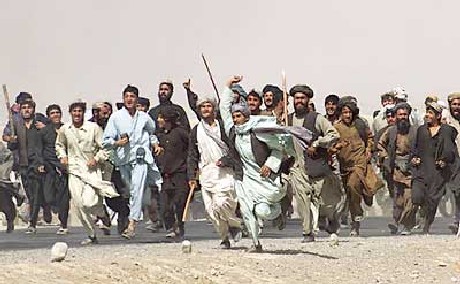
The oil spill in the Gulf of Mexico has so far cost BP a total of $3.12bn (£2bn), the company has said.
The total includes the cost of containing the spill and cleaning up the oil, and the cost of drilling relief wells.
It also includes the $147m paid out in compensation to some of those affected by the spill.
But BP again warned that the total cost of the spill is likely to be much higher.
The cost is already significantly higher than the $2.65bn cost reported a week ago.
BP said there were now 44,500 people working on the spill response - nearly 5,000 more than a week ago.
But the company also confirmed that efforts to collect oil from the surface of the water had been temporarily placed on hold due to Hurricane Alex, which is currently passing through the region.
Oil is continuing to leak into the Gulf of Mexico following the explosion on the Deepwater Horizon oil rig in April.
BP said two relief wells being drilled to stop the leak are still on course for completion by August.
Shares in BP rose 0.8% at the beginning of trading in London. They remain at less than half their value before the disaster, however.
Investors remain uncertain over the eventual financial impact of the oil disaster, with estimates in the tens of billions.
Meanwhile the collapse in the share price has lead to speculation that BP may become a takeover target.
Last week investment bank JP Morgan Cazenove suggested oil giant Exxon Mobil as a possible buyer.

Sunday, July 4, 2010

Why West Lost Afghan War

Why West Lost Afghan War

By Michael Scheuer

20-20taliban.jpg
The former head of the CIA's bin Laden unit says the US-led coalition has already lost the war in Afghanistan. A shake-up in military leadership won't change that.

July 1, 2010

Recent events surrounding Afghanistan shouldn’t confuse anyone, as the reality of the situation still lies in one simple statement: The US-NATO coalition has lost a war its political leaders never meant, or knew how, to win.

'Winning’ in Afghanistan was never anything more than killing Osama bin Laden, Ayman al-Zawahiri, Mullah Omar, as many of their fighters and civilian supporters as possible and then getting out immediately with the full knowledge that—as Mao said long ago—insurgencies always rebuild and the process might need to be repeated.

The best and most appropriate response to al-Qaeda’s September 11 raid, then, would have been a unilateral US punitive expedition that inflicted massive death and destruction on the enemy and delivered a clear warning to Islamists not to pick fights with the United States. Indeed, many Islamists expected this response, which is why they poured vitriol on bin Laden and expected the US military to set back their movement a decade, if it did not destroy it completely.

Faced with this criticism, bin Laden simply said 'wait,’ adding (in paraphrase) that the Americans and their allies can’t stomach casualties, that they won’t use their full military power and will unite Afghans by trying to Westernize them via popular elections, installing women’s rights, dismantling tribalism, introducing secularism and establishing NGO-backed bars and whorehouses in Kabul. Bin Laden was right; it seems he is, among other things, a keen student of the West’s past nation-building operations.

Since June 1, the parade of incompetents crossing the Afghan stage is stunning: Gen. Stanley McChrystal, US President Barack Obama, Gen. David Petraeus, Afghan President Hamid Karzai—the list is long. McChrystal, saddled with a dead-end strategy devised by David Kilcullen, John Nagl and other counterinsurgency 'experts,’ gave access to himself and his staff to Rolling Stone, long among the most anti-military US journals.

For his trouble and indiscreet words, McChrystal was fired by Obama—who, with his senior advisers, merit all the negative things said about them—and replaced by that purveyor of military snake oil, Gen. Petraeus. Even as the transitory success of the Iraq 'surge’ is unravelling, Petraeus takes the Afghan command saying everything is okay (within a week the Pentagon’s media machine was telling Congress and Western publics that the 'Afghan war is on track.’)

While this has played out, Hamid Karzai reportedly met with Sirajuddin Haqqani—a major Afghan insurgent leader—and prepared to surrender under the guise of creating a coalition regime. For all his failures and fabulously corrupt relatives, Karzai can easily solve the dilemma the West can’t even frame accurately: Question: What does the Taliban and its allies want? Answer: Power. So Karzai is talking to Haqqani, and probably Taliban leaders, to see if there’s a governing arrangement that will give him a role in post-NATO Afghanistan and doesn’t lead to his execution after the last NATO trooper leaves. The chance of this is near nil, however, and so Karzai and his family will have to step up the pace of their alleged thievery and get ready for an early exit that leaves the West holding the bag.

And as these parties circle the Afghan drain, Lindsay Graham, a much but inexplicably respected Republican senator from South Carolina, said: 'This is a chance to start over completely [in Afghanistan].’ At the start of the US Civil War it was said South Carolina’s fatal flaw was that it’s too small to be a nation and too big to be an insane asylum. Sen. Graham has reconfirmed this truism.

After nine years, it is utterly impossible to restart Western policy in Afghanistan. Too many Afghans are dead; too many Afghans and non-Afghan Muslims have joined the Taliban-led insurgency; too much pro-Taliban money is pouring into Afghanistan from wealthy donors on the Arabian Peninsula and across the Muslim world; too much Western funding has been stolen and sent abroad by Karzai’s cronies; too much popular support for the war in the West has been squandered; too many U.S.-NATO troops are dead or maimed; too much has been done by the West to push Pakistan toward the abyss by demanding its military do Western dirty work; and too much time has been wasted on counterinsurgency theories and policies that avoid killing the enemy and his civilian supporters. The one thing the West 'can start over completely’ is a revision of the plans for withdrawal that moves up the departure date.

The bottom line is that the United States and NATO stand defeated in Afghanistan. Under McChrystal, Petraeus, or Obama himself the counterinsurgency strategy now being flogged has been intellectually bankrupt from its inception. No better proof of this can be found than the fact that the part of the policy meant to address the Afghans’ 'quality of life’ has been a substantial success.

There are 3 million-plus more Afghan children in school today than in 2001; more electricity and potable water are available; many roads and irrigation systems have been rebuilt; and more primary health care is being delivered. Kilcullen, Nagl and their colleagues argued that such success would prompt the Afghans to turn away from the Taliban’s religiosity and nationalism and isolate that purportedly small force from a population swelling with delight and loyalty to Karzai because of material improvements. In short, a social science-powered, mini-New Deal in Afghanistan would win with minimal use of US-NATO military power because Afghans would joyfully jettison God and country for better teeth and smoother roads.

Well, no such thing occurred. As the trend line for these accomplishments rose, the positive trend line for the Taliban-led insurgency rose faster. The once southern-Afghanistan-based insurgency spread across the nation; the Taliban and its allies struck in Kabul at their pleasure; and the large military/social-work operation to clear insurgents from Marjah District in Helmand Province—framed as the test case to validate US-NATO strategy—became, in McChrystal’s words, an endless, 'bleeding ulcer’ as the Taliban has gradually reasserted control there.

The enraging and unifying impact on Afghans of the US-NATO occupation of the country; Western support for the unrepresentative and corrupt Kabul regime; and the secularizing campaign by Western governmental agencies and NGOs has not and will never be negated by purer water and more refrigeration. The Afghans will appreciate and pocket the material improvements even as more of them take up arms to drive out occupiers they perceive as the enemies of God and Afghanistan. Western leaders should have recalled they’re not fighting Westerners, for whom more ice cubes and tetanus shots might have been enough to give up their faith.

A year after Obama outlined this new strategy at West Point it lay in shreds and tatters: the Taliban, et. al are more powerful and geographically dispersed, and the Afghan people are no less Islamic or nationalistic. The ever-present avenging angel of history ignored is exacting its pound of flesh and is still hungry. And the bin Laden-inspired Islamists are nearing victory over the world’s last superpower, a win that will have a galvanizing anti-US impact in the Islamic world by showing Muslims the impossible is possible.

The tragedy of this reality is that it would have taken no highly classified intelligence data or deeply penetrating brain power to predict its occurrence. A week’s reading at the local library about the occupations of Afghanistan by Alexander the Great, the British Empire and the Soviet Union shows each empire was sooner or later defeated and evicted—Alexander lasted longest because he built Greek colonies—by the most basic Afghan trait which has been transparently and overwhelmingly dominant since the 4th century B.C.: Afghans refuse to tolerate foreign occupation and rule.

Reading history’s lessons also would have shown that the one foreigner who had the most successful strategy for Afghanistan was Genghis Khan. He killed all the Afghan fighters and their families he encountered, built mountains of their skulls to remind Afghans that Mongols are not to be trifled with and then got his army out of the country to India as quickly as possible. George W. Bush had the chance to play Genghis for about a year but didn’t. Instead, he and his clone Obama defied history to try to win the love of Afghans and international applause. In the end, both men earned and richly merited what we see today—abject Western defeat.

Michael Scheuer is the author of 'Imperial Hubris’ and former chief of the CIA’s Bin Laden Issue Station.