THE POSTS MOSTLY BY GEOGRAPHICAL DISTRIBUTION

THE POSTS MOSTLY BY GEOGRAPHICAL DISTRIBUTION

THE POSTS MOSTLY BY GEOGRAPHICAL DISTRIBUTION

.

.
Boston artist Steve Mills - realistic painting
Showing posts with label RELIGION. Show all posts

Sunday, August 12, 2012

Should a 10-year-old Jewish girl be baptised against her mother's wishes?


Suffer the little children to come unto me

Should a 10-year-old Jewish girl be baptised against her mother's wishes? Judge Platt handed down an empathetic judgment last week

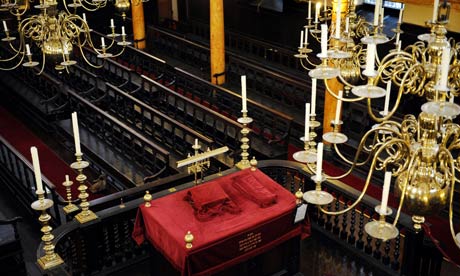
Bevis Marks Synagogue in London
Bevis Marks Synagogue in London. Photograph: Linda Nylind for the Guardian
When might it be in the best interests of a Jewish 10-year-old to be baptised as a Christian? That was the question Judge Platt had to decide at Romford county court in Essex earlier this year. His judgment, released for publication at the end of last week, makes fascinating reading.
It involves a couple who were divorced in 2010 after 14 years of marriage. They had two children: a girl who is now nearly 11 and a boy who is nearly six. Both parents are Jewish, as are all four grandparents.
As usual in such cases, the family cannot be identified. But the impression one gets from the judgment is of an extended family that is culturally Jewish rather than religiously committed. According to the father, neither his own parents nor his former wife's parents "have ever strictly observed what would be regarded as the outward manifestations of the Jewish faith, for example by regular attendance at the synagogue or observance of Jewish festivals or kosher dietary rules".
That approach was followed by the father and mother themselves, the judge found. "The only occasions on which they attended the synagogue were as guests at a wedding or bar mitzvah celebration. Neither of them took any steps to provide the children with any instruction in the Jewishreligion; nor did they celebrate or observe any of the religious festivals in the Jewish calendar. They would often be at work on Jewish holy days."
So their children grew up without any religious beliefs or practices - even in the home, which Jews regard as more important than the synagogue for these purposes. After their divorce, the couple agreed that their two children should live with each parent alternately for a week at a time.
What made things more complicated was that the father had decided to become a Christian. After the marriage had come to an end but while the couple were still living under the same roof, the father experienced what he described as a meeting with God. "He started attending church each Sunday which naturally excited the interest of his children," the judge said. "They asked if they could come with him and, with the agreement of the mother, they have been attending church regularly ever since."
Last summer, the father took both children to a Christian residential event, run by New Wine, a well-established group of local churches which wants "to see the church become a missionary movement". On the way back, the daughter told her father that she, too, had experienced an encounter with God and wished to be baptised.
After the daughter had told her mother this, the mother applied for an injunction to stop the father baptising or confirming either child. The application was made without notice to the father.
When the father heard that a temporary order had been made against him, he complained that his former wife had given their daughter the impression that the couple were fighting over an issue that they should have resolved without going to court. Judge Platt agreed that "by choosing the route of confrontation rather than negotiation, she has presented [the daughter] with a picture of her parents at war, which is deeply distressing to the child and has caused her emotional distress".
But what was the judge to do now? By law, his "paramount consideration" must be the "child's welfare". The court has no power to order the girl to baptised. What the judge had to do was to decide whether he should stop the father from taking steps leading towards the child's baptism, as the mother had asked.
In the end, the judge was satisfied that the child's "welfare interests are best served by allowing her to be enrolled in a baptism class and to present herself for baptism into the Christian church as soon as she is ready". However, the judge ruled that her confirmation into the church should not take place before she is 16, unless the mother agrees.
Tellingly, the judge found that the girl's "upbringing for the first eight years of her life lacked any significant religious teaching upon which her own moral compass could be based. Her exposure to Christian teaching and her positive reaction to that clearly indicates that she has an emotional need which is being met by this experience."
After the parents had separated, the mother's only concession to this emotional need was to light what the judge describes as "a candle" at home on Friday nights. Since Jewish custom is to welcome the sabbath by lighting two candles, and sometimes more, I hope that this was an error by the judge rather than by the mother.
The mother also did herself no favours by asking a rabbi from the strictly orthodox Lubavitch movement to write a letter to the court. The rabbi, based at Buckhurst Hill in Essex, had clearly not been given the full facts of the case.
So it was left to Judge Platt to set out his own knowledge of Jewish law, while explaining that it had played no part in his decision-making process because it was not based on expert evidence. As he understood it, "a person who is born a Jew cannot deprive himself of his Jewish status. Christian baptism does not have any effect on that status. The purported act of conversion to Christianity simply has no legal effect and [the child] would therefore be free to resume her Jewish faith at any time if she wished to do so."
That strikes me as entirely accurate. One may become a bishop or a cardinal and still remain Jewish under Jewish law.
The judge also went to some lengths to help the girl understand what he had decided, writing her a letter in child-friendly language. "Being baptised does not mean that you give up your Jewish heritage," he told her. "That will always be part of you and I hope that you will continue to learn more about that heritage and about your mother's faith.
"Even after you are baptised you are still free to change your mind about your faith later when you are older. Finally, and this is the most important thing, both your mother and father will carry on loving you just as much whatever happens about your baptism."
Judge Platt directed that the child was not to be shown a copy of his judgment, though it is now a public document and there is nothing to stop her finding it and reading it.
What are we to make of this ruling? It rather depends on one's starting point.
Legally, it strikes me as impeccable. The girl is a bright and intelligent child, academically advanced and able to express her views. As a result of her upbringing, and no doubt as a result of her parents' divorce, she has emotional needs which she wishes to satisfy through religious practice. She has seized on the first religious experience to which she has been exposed.
If one of her parents had adopted an observant Jewish lifestyle and then exposed her to it, she might just as easily espoused the religion of her birth. As the judge correctly observed, that remains possible. People change as they grow older.
The girl may be strengthened by her new-found religious faith. Or she may become confused and disillusioned. Odom Brandman, the Lubavitch rabbi from Buckhurst Hill, was wise to tell the court that Jews "don't encourage conversion either way, as it is unnatural for a person to change the religion they are born into and which thus is ingrained in their soul".
One should not be too hard on the girl's parents. By all accounts, they were bringing their children up in the same way as they themselves had been brought up. Cultural Judaism can be a strong force for good.
And what if your starting point is non-religious? You may well think that it would have been in the child's best interests if she could have remained entirely secular, as she had been for the first eight years of her life. Let her choose when she grows up, some might say.
But the wider lesson from this case is that it is surely desirable to give one's children some sort of ethical structure to cling on to as they grow up - beyond teaching them obedience to their parents and the difference between right and wrong, as these two children were properly taught. It may be one of the world's established religions, provided it is taught in a loving, measured way. It may well be humanism, atheism or even agnosticism. But it must surely be something

Tuesday, September 13, 2011

The number of Christians in CHINA multiplies.

Christians in China: Is the country in spiritual crisis?


A Catholic Mass in Wuhan  
More people go to church on Sunday in China than in the whole of Europe.


Many of China's churches are overflowing, as the number of Christians in the country multiplies. In the past, repression drove people to convert - is the cause now rampant capitalism?

It is impossible to say how many Christians there are in China today, but no-one denies the numbers are exploding.

The government says 25 million, 18 million Protestants and six million Catholics. Independent estimates all agree this is a vast underestimate. A conservative figure is 60 million. There are already more Chinese at church on a Sunday than in the whole of Europe.

The new converts can be found from peasants in the remote rural villages to the sophisticated young middle class in the booming cities.
Driven underground
There is a complexity in the structures of Chinese Christianity which is little understood in the West. To start with, Catholicism and Protestantism are designated by the state as two separate religions.

Haidian Church, Beijing  
The Haidian Christian Church in Beijing was completely re-built to cope with rising numbers
 

Throughout the 20th Century, Christianity was associated with Western imperialism. After the Communist victory in 1949, the missionaries were expelled, but Christianity was permitted in state-sanctioned churches, so long as they gave their primary allegiance to the Communist Party.

Mao, on the other hand, described religion as "poison", and the Cultural Revolution of the 1960s and 70s attempted to eradicate it. Driven underground, Christianity not only survived, but with its own Chinese martyrs, it grew in strength.

Since the 1980s, when religious belief was again permitted, the official Churches have gradually created more space for themselves.

They report to the State Administration for Religious Affairs. They are forbidden to take part in any religious activity outside their places of worship and sign up to the slogan, "Love the country - love your religion."

In return the Party promotes atheism in schools but undertakes "to protect and respect religion until such time as religion itself will disappear".
House Churches
Protestants and Catholics are both divided into official and unofficial Churches.

“Start Quote

The old have seen the old certainties of Marxism-Leninism transmute into the most visceral capitalist society on earth”

The officially sanctioned Catholic Patriotic Association appoints its own bishops and is not allowed to have any dealings with the Vatican, though Catholics are allowed to recognise the spiritual authority of the Pope.

There is a larger Catholic underground church, supported by the Vatican. Inch by inch, the Vatican and the government have been moving towards accommodation. Most bishops are now recognised by both, with neither side admitting the greater sovereignty of the other.

Yet in the past few months, the Chinese government has again turned tough, ordaining its bishops in the teeth of opposition from the Vatican which has in turn excommunicated one of them.

Even so, it would be wrong simply to dismiss the official church as a sham.


In the mountains West of Beijing, I visited the village of Hou Sangyu where a Catholic Church has stood since the 14th Century. 


Tim Gardam with the Catholic sisters of Sanju
  • Tim Gardam is the Principal of St Anne's College, Oxford.
  • He is pictured here with the Catholic Sisters of Sangyu.
  • God in China, Christianity and Catholicism will be on BBC Radio 4 at 8pm on Monday 12 September.

The tough faith of these old people had withstood the Japanese invasion and the Cultural Revolution. The village clinic was run by nuns, one from Inner Mongolia, a Catholic stronghold.

It is from such villages that the Catholic Church recruits its young ordinands, to undertake training for the priesthood.

The official Protestant Church is growing faster than Catholicism.

On Easter morning, in downtown Beijing, I watched five services, each packed with over 1,500 worshippers. Sunday school was spilling on to the street.

However, these numbers are dwarfed by the unofficial "house churches", spreading across the country, at odds with the official Church which fears the house churches' fervour may provoke a backlash.

What the authorities consider non-negotiable is the house churches' refusal to acknowledge any official authority over their organisation.

The State fears the influence of zealous American evangelism and some of the House Church theology has those characteristics, but, in many other respects, it seems to be an indigenous Chinese movement - charismatic, energetic and young.

An educated young Christian described her church to me: "We have 50 young professionals in this church. Everyone is so busy working, you don't have time socialising, and even if you are socialising, you are putting on a fake face.

"But in church people feel warm, they feel welcome… they feel people really love them so they really want to join the community, a lot of people come for this."
Alpha marriage course
A Chinese academic close to the government told me that the government would prefer to ignore the house churches, as unlike the Falun Gong they are not seen as a threat. But where a church oversteps the line, as happened in Beijing this year, taking its worship on to the streets, then the authorities will crack down.

“Start Quote

The worship of Mammon… has become many people's life purpose”
Professor He Guanghu Renmin University, Beijing
 

In some areas the state has sought to enlist Christianity into its "big idea" of a "harmonious society" - the slogan that dominates Chinese public life. There has been official interest in the Western evangelical Alpha Marriage Course, because of alarm at the escalating divorce rate among young Chinese.

What must unsettle the authorities most is the reason why so many are turning to the churches.

I heard people talking again and again of a "spiritual crisis" in China - a phrase that has even been used by the Premier Wen Jiao Bao. The old have seen the old certainties of Marxism-Leninism transmute into the most visceral capitalist society on earth.

For the young, in the stampede to get rich, trust in institutions, between individuals, between the generations, is breaking down.

As one of China's most eminent philosophers of religion - Professor He Guanghu, at Renmin University in Beijing put it to me: "The worship of Mammon… has become many people's life purpose.

"I think it is very natural that many other people will not be satisfied... will seek some meaning for their lives so that when Christianity falls into their lives, they will seize it very tightly."

Wednesday, July 7, 2010

Rise of the Religious Left


The New York Times


  • July 2, 2010

    Rise of the Religious Left

    Which political party’s members are most likely to believe that Jesus will definitely return to earth before midcentury? The Republicans, right? Wrong. The Democrats.
    This was revealed by a report issued last week by the Pew Research Center for the People and the Press.
    On the surface it may seem surprising, but, in fact, it’s quite logical. Blacks and Hispanics, two highly religious groups, are a growing part of the Democratic Party. A June 2009 Gallup report found that blacks and Hispanics constituted 30 percent of the party. Recent polling by Pew puts the number at 37 percent.
    According to a Gallup report issued last Friday, church attendance among blacks is exactly the same as among conservatives and among Republicans. Hispanics closely follow. Furthermore, a February Gallup report found that blacks and Hispanics, respectively, were the most likely to say that religion was an important part of their daily lives. In fact, on the Jesus question, nonwhite Democrats were roughly twice as likely as white Democrats to believe that He would return to earth by 2050.
    Add to this the fact that, according to the 2009 Gallup report, 20 percent of the Democratic Party is composed of highly religious whites who attend church once a week or more, and you quickly stop second-guessing the Second Coming numbers.
    Welcome to the Religious Left, which will continue to grow as the percentage of minorities in the country and in the party grows.
    People often ask whether the Republican Party will have to move to the left to remain viable. However, the question rarely asked is whether the growing religiosity on the left will push the Democrats toward the right.
    At the moment, that answer is both yes and no. On the one hand, unlike John Kerry before him, Barack Obama made a strong play for the religious vote on his march to the White House. It worked so well that it’s likely to continue, if not intensify, among Democratic candidates. On the other hand, the religious left is not the religious right. The left isn’t as organized or assertive. For the most part, it seems to have made its peace with the mishmash of morality under the Democratic umbrella, rallying instead around some core Democratic tenets: protection of, and equality for, the disenfranchised and providing greater opportunity and assistance for the poor.
    The unanswerable questions are whether these highly religious, socially conservative Democrats will remain loyal to a liberal agenda as they become the majority of the party and their financial and social standing improves. Or whether Republicans will finally make headway in recruiting them. The future only knows.
    Then again, the world as we know it may not have much of a future if, as these Democrats believe, a deity will soon descend from the sky