THE POSTS MOSTLY BY GEOGRAPHICAL DISTRIBUTION

THE POSTS MOSTLY BY GEOGRAPHICAL DISTRIBUTION

.

.
Boston artist Steve Mills - realistic painting

Sunday, August 12, 2012

Should a 10-year-old Jewish girl be baptised against her mother's wishes?


Suffer the little children to come unto me

Should a 10-year-old Jewish girl be baptised against her mother's wishes? Judge Platt handed down an empathetic judgment last week

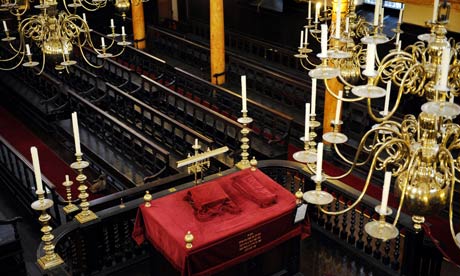
Bevis Marks Synagogue in London
Bevis Marks Synagogue in London. Photograph: Linda Nylind for the Guardian
When might it be in the best interests of a Jewish 10-year-old to be baptised as a Christian? That was the question Judge Platt had to decide at Romford county court in Essex earlier this year. His judgment, released for publication at the end of last week, makes fascinating reading.
It involves a couple who were divorced in 2010 after 14 years of marriage. They had two children: a girl who is now nearly 11 and a boy who is nearly six. Both parents are Jewish, as are all four grandparents.
As usual in such cases, the family cannot be identified. But the impression one gets from the judgment is of an extended family that is culturally Jewish rather than religiously committed. According to the father, neither his own parents nor his former wife's parents "have ever strictly observed what would be regarded as the outward manifestations of the Jewish faith, for example by regular attendance at the synagogue or observance of Jewish festivals or kosher dietary rules".
That approach was followed by the father and mother themselves, the judge found. "The only occasions on which they attended the synagogue were as guests at a wedding or bar mitzvah celebration. Neither of them took any steps to provide the children with any instruction in the Jewishreligion; nor did they celebrate or observe any of the religious festivals in the Jewish calendar. They would often be at work on Jewish holy days."
So their children grew up without any religious beliefs or practices - even in the home, which Jews regard as more important than the synagogue for these purposes. After their divorce, the couple agreed that their two children should live with each parent alternately for a week at a time.
What made things more complicated was that the father had decided to become a Christian. After the marriage had come to an end but while the couple were still living under the same roof, the father experienced what he described as a meeting with God. "He started attending church each Sunday which naturally excited the interest of his children," the judge said. "They asked if they could come with him and, with the agreement of the mother, they have been attending church regularly ever since."
Last summer, the father took both children to a Christian residential event, run by New Wine, a well-established group of local churches which wants "to see the church become a missionary movement". On the way back, the daughter told her father that she, too, had experienced an encounter with God and wished to be baptised.
After the daughter had told her mother this, the mother applied for an injunction to stop the father baptising or confirming either child. The application was made without notice to the father.
When the father heard that a temporary order had been made against him, he complained that his former wife had given their daughter the impression that the couple were fighting over an issue that they should have resolved without going to court. Judge Platt agreed that "by choosing the route of confrontation rather than negotiation, she has presented [the daughter] with a picture of her parents at war, which is deeply distressing to the child and has caused her emotional distress".
But what was the judge to do now? By law, his "paramount consideration" must be the "child's welfare". The court has no power to order the girl to baptised. What the judge had to do was to decide whether he should stop the father from taking steps leading towards the child's baptism, as the mother had asked.
In the end, the judge was satisfied that the child's "welfare interests are best served by allowing her to be enrolled in a baptism class and to present herself for baptism into the Christian church as soon as she is ready". However, the judge ruled that her confirmation into the church should not take place before she is 16, unless the mother agrees.
Tellingly, the judge found that the girl's "upbringing for the first eight years of her life lacked any significant religious teaching upon which her own moral compass could be based. Her exposure to Christian teaching and her positive reaction to that clearly indicates that she has an emotional need which is being met by this experience."
After the parents had separated, the mother's only concession to this emotional need was to light what the judge describes as "a candle" at home on Friday nights. Since Jewish custom is to welcome the sabbath by lighting two candles, and sometimes more, I hope that this was an error by the judge rather than by the mother.
The mother also did herself no favours by asking a rabbi from the strictly orthodox Lubavitch movement to write a letter to the court. The rabbi, based at Buckhurst Hill in Essex, had clearly not been given the full facts of the case.
So it was left to Judge Platt to set out his own knowledge of Jewish law, while explaining that it had played no part in his decision-making process because it was not based on expert evidence. As he understood it, "a person who is born a Jew cannot deprive himself of his Jewish status. Christian baptism does not have any effect on that status. The purported act of conversion to Christianity simply has no legal effect and [the child] would therefore be free to resume her Jewish faith at any time if she wished to do so."
That strikes me as entirely accurate. One may become a bishop or a cardinal and still remain Jewish under Jewish law.
The judge also went to some lengths to help the girl understand what he had decided, writing her a letter in child-friendly language. "Being baptised does not mean that you give up your Jewish heritage," he told her. "That will always be part of you and I hope that you will continue to learn more about that heritage and about your mother's faith.
"Even after you are baptised you are still free to change your mind about your faith later when you are older. Finally, and this is the most important thing, both your mother and father will carry on loving you just as much whatever happens about your baptism."
Judge Platt directed that the child was not to be shown a copy of his judgment, though it is now a public document and there is nothing to stop her finding it and reading it.
What are we to make of this ruling? It rather depends on one's starting point.
Legally, it strikes me as impeccable. The girl is a bright and intelligent child, academically advanced and able to express her views. As a result of her upbringing, and no doubt as a result of her parents' divorce, she has emotional needs which she wishes to satisfy through religious practice. She has seized on the first religious experience to which she has been exposed.
If one of her parents had adopted an observant Jewish lifestyle and then exposed her to it, she might just as easily espoused the religion of her birth. As the judge correctly observed, that remains possible. People change as they grow older.
The girl may be strengthened by her new-found religious faith. Or she may become confused and disillusioned. Odom Brandman, the Lubavitch rabbi from Buckhurst Hill, was wise to tell the court that Jews "don't encourage conversion either way, as it is unnatural for a person to change the religion they are born into and which thus is ingrained in their soul".
One should not be too hard on the girl's parents. By all accounts, they were bringing their children up in the same way as they themselves had been brought up. Cultural Judaism can be a strong force for good.
And what if your starting point is non-religious? You may well think that it would have been in the child's best interests if she could have remained entirely secular, as she had been for the first eight years of her life. Let her choose when she grows up, some might say.
But the wider lesson from this case is that it is surely desirable to give one's children some sort of ethical structure to cling on to as they grow up - beyond teaching them obedience to their parents and the difference between right and wrong, as these two children were properly taught. It may be one of the world's established religions, provided it is taught in a loving, measured way. It may well be humanism, atheism or even agnosticism. But it must surely be something

Clinton: Remain vigilant against Holocaust denial


Clinton: Remain vigilant against Holocaust denial

WASHINGTON (JTA) -- U.S. Secretary of State Hillary Clinton said that Holocaust denial and Israel criticism that crosses into anti-Semitism require vigilance.
On Tuesday, Clinton addressed a symposium at the U.S. Holocaust Memorial Museum on preventing genocide.
"Let me begin by acknowledging that here in this museum, it’s important to note that every generation produces extremist voices denying that the Holocaust ever happened," she said.  "And we must remain vigilant against those deniers and against anti-Semitism, because when heads of state and religious leaders deny the Holocaust from their bully pulpits, we cannot let their lies go unanswered.  
"When we hear Holocaust glorification and public calls to, quote, 'finish the job,' we need to make clear that violence, bigotry will not be tolerated," she continued. "And, yes, when criticism of Israeli government policies crosses over into demonization of Israel and Jews, we must push back."
Clinton outlined policies that she said were aimed at genocide prevention, including training officials in detecting warning signs, the use of technology to enhance monitoring, pressuring oppressive regimes and making clear that perpetrators will be held accountable.
She also emphasized limits, suggesting that some well-intentioned efforts could worsen the situation.
"We have to approach this work with a large dose of humility and understanding," Clinton said.
The museum released a poll, timed for the symposium, showing that substantial majorities of Americans believe that genocide is still possible and favoring intervention to stop it. The poll, commissioned and conducted by Burson-Marsteller, a public relations firm, and Penn Schoen Berland, a pollster, showed that 94 percent of Americans believe genocide "is still very much a concern and could occur today."
It also showed that 69 percent "think the U.S. should prevent or stop genocide or mass atrocities from occurring in another part of the world.

JOHN PILGER-The lies of Hiroshima are the lies of today


JOHN PILGER.com


The films and journalism of John Pilger

The lies of Hiroshima are the lies of today

6 August 2008

When I first went to Hiroshima in 1967, the shadow on the steps was still there. It was an almost perfect impression of a human being at ease: legs splayed, back bent, one hand by her side as she sat waiting for a bank to open. At a quarter past eight on the morning of August 6, 1945, she and her silhouette were burned into the granite. I stared at the shadow for an hour or more, then walked down to the river and met a man called Yukio, whose chest was still etched with the pattern of the shirt he was wearing when the atomic bomb was dropped.

He and his family still lived in a shack thrown up in the dust of an atomic desert. He described a huge flash over the city, "a bluish light, something like an electrical short", after which wind blew like a tornado and black rain fell. "I was thrown on the ground and noticed only the stalks of my flowers were left. Everything was still and quiet, and when I got up, there were people naked, not saying anything. Some of them had no skin or hair. I was certain I was dead." Nine years later, when I returned to look for him, he was dead from leukaemia.

In the immediate aftermath of the bomb, the allied occupation authorities banned all mention of radiation poisoning and insisted that people had been killed or injured only by the bomb's blast. It was the first big lie. "No radioactivity in Hiroshima ruin" said the front page of the New York Times, a classic of disinformation and journalistic abdication, which the Australian reporter Wilfred Burchett put right with his scoop of the century. "I write this as a warning to the world," reported Burchett in the Daily Express, having reached Hiroshima after a perilous journey, the first correspondent to dare. He described hospital wards filled with people with no visible injuries but who were dying from what he called "an atomic plague". For telling this truth, his press accreditation was withdrawn, he was pilloried and smeared - and vindicated.

The atomic bombing of Hiroshima and Nagasaki was a criminal act on an epic scale. It was premeditated mass murder that unleashed a weapon of intrinsic criminality. For this reason its apologists have sought refuge in the mythology of the ultimate "good war", whose "ethical bath", as Richard Drayton called it, has allowed the west not only to expiate its bloody imperial past but to promote 60 years of rapacious war, always beneath the shadow of The Bomb.

The most enduring lie is that the atomic bomb was dropped to end the war in the Pacific and save lives. "Even without the atomic bombing attacks," concluded the United States Strategic Bombing Survey of 1946, "air supremacy over Japan could have exerted sufficient pressure to bring about unconditional surrender and obviate the need for invasion. Based on a detailed investigation of all the facts, and supported by the testimony of the surviving Japanese leaders involved, it is the Survey's opinion that ... Japan would have surrendered even if the atomic bombs had not been dropped, even if Russia had not entered the war and even if no invasion had been planned or contemplated."

The National Archives in Washington contain US government documents that chart Japanese peace overtures as early as 1943. None was pursued. A cable sent on May 5, 1945 by the German ambassador in Tokyo and intercepted by the US dispels any doubt that the Japanese were desperate to sue for peace, including "capitulation even if the terms were hard". Instead, the US secretary of war, Henry Stimson, told President Truman he was "fearful" that the US air force would have Japan so "bombed out" that the new weapon would not be able "to show its strength". He later admitted that "no effort was made, and none was seriously considered, to achieve surrender merely in order not to have to use the bomb". His foreign policy colleagues were eager "to browbeat the Russians with the bomb held rather ostentatiously on our hip". General Leslie Groves, director of the Manhattan Project that made the bomb, testified: "There was never any illusion on my part that Russia was our enemy, and that the project was conducted on that basis." The day after Hiroshima was obliterated, President Truman voiced his satisfaction with the "overwhelming success" of "the experiment".

Since 1945, the United States is believed to have been on the brink of using nuclear weapons at least three times. In waging their bogus "war on terror", the present governments in Washington and London have declared they are prepared to make "pre-emptive" nuclear strikes against non-nuclear states. With each stroke toward the midnight of a nuclear Armageddon, the lies of justification grow more outrageous. Iran is the current "threat". But Iran has no nuclear weapons and the disinformation that it is planning a nuclear arsenal comes largely from a discredited CIA-sponsored Iranian opposition group, the MEK - just as the lies about Saddam Hussein's weapons of mass destruction originated with the Iraqi National Congress, set up by Washington.

The role of western journalism in erecting this straw man is critical. That America's Defence Intelligence Estimate says "with high confidence" that Iran gave up its nuclear weapons programme in 2003 has been consigned to the memory hole. That Iran's president Mahmoud Ahmadinejad never threatened to "wipe Israel off the map" is of no interest. But such has been the mantra of this media "fact" that in his recent, obsequious performance before the Israeli parliament, Gordon Brown alluded to it as he threatened Iran, yet again.

This progression of lies has brought us to one of the most dangerous nuclear crises since 1945, because the real threat remains almost unmentionable in western establishment circles and therefore in the media. There is only one rampant nuclear power in the Middle East and that is Israel. The heroic Mordechai Vanunu tried to warn the world in 1986 when he smuggled out evidence that Israel was building as many as 200 nuclear warheads. In defiance of UN resolutions, Israel is today clearly itching to attack Iran, fearful that a new American administration might, just might, conduct genuine negotiations with a nation the west has defiled since Britain and America overthrew Iranian democracy in 1953.

In the New York Times on July 18, the Israeli historian Benny Morris, once considered a liberal and now a consultant to his country's political and military establishment, threatened "an Iran turned into a nuclear wasteland". This would be mass murder. For a Jew, the irony cries out.

The question begs: are the rest of us to be mere bystanders, claiming, as good Germans did, that "we did not know"? Do we hide ever more behind what Richard Falk has called "a self-righteous, one-way, legal/moral screen [with] positive images of western values and innocence portrayed as threatened, validating a campaign of unrestricted violence"? Catching war criminals is fashionable again. Radovan Karadzic stands in the dock, but Sharon and Olmert, Bush and Blair do not. Why not? The memory of Hiroshima requires an answer.
-------

JOHN PILGER'S LATEST FILM 'THE WAR YOU DON'T SEE' AVAILABLE TO WATCH ONLINE

The_War_You_Dont_See_poster.jpg

Ralph Raico-Hiroshima and Nagasaki


Hiroshima and Nagasaki

by Ralph Raico


This excerpt from Ralph Raico's "Harry S. Truman: Advancing the Revolution" in John V. Denson, ed., Reassessing the Presidency: The Rise of the Executive State and the Decline of Freedom(Auburn, Alabama: Ludwig von Mises Institute, 2001), is reprinted with permission. (The notes are numbered as they are because this is an excerpt. Read the whole article.)
The most spectacular episode of Truman's presidency will never be forgotten, but will be forever linked to his name: the atomic bombings of Hiroshima on August 6, 1945, and of Nagasaki three days later. Probably around two hundred thousand persons were killed in the attacks and through radiation poisoning; the vast majority were civilians, including several thousand Korean workers. Twelve U.S. Navy fliers incarcerated in a Hiroshima jail were also among the dead.87
Great controversy has always surrounded the bombings. One thing Truman insisted on from the start: The decision to use the bombs, and the responsibility it entailed, was his. Over the years, he gave different, and contradictory, grounds for his decision. Sometimes he implied that he had acted simply out of revenge. To a clergyman who criticized him, Truman responded, testily:
Nobody is more disturbed over the use of Atomic bombs than I am but I was greatly disturbed over the unwarranted attack by the Japanese on Pearl Harbor and their murder of our prisoners of war. The only language they seem to understand is the one we have been using to bombard them.88
Such reasoning will not impress anyone who fails to see how the brutality of the Japanese military could justify deadly retaliation against innocent men, women, and children. Truman doubtless was aware of this, so from time to time he advanced other pretexts. On August 9, 1945, he stated: "The world will note that the first atomic bomb was dropped on Hiroshima, a military base. That was because we wished in this first attack to avoid, insofar as possible, the killing of civilians."89
This, however, is absurd. Pearl Harbor was a military base. Hiroshima was a city, inhabited by some three hundred thousand people, which contained military elements. In any case, since the harbor was mined and the U.S. Navy and Air Force were in control of the waters around Japan, whatever troops were stationed in Hiroshima had been effectively neutralized.
On other occasions, Truman claimed that Hiroshima was bombed because it was an industrial center. But, as noted in the U.S. Strategic Bombing Survey, "all major factories in Hiroshima were on the periphery of the city – and escaped serious damage."90The target was the center of the city. That Truman realized the kind of victims the bombs consumed is evident from his comment to his cabinet on August 10, explaining his reluctance to drop a third bomb: "The thought of wiping out another 100,000 people was too horrible," he said; he didn't like the idea of killing "all those kids."91 Wiping out another one hundred thousand people . . . all those kids.
Moreover, the notion that Hiroshima was a major military or industrial center is implausible on the face of it. The city had remained untouched through years of devastating air attacks on the Japanese home islands, and never figured in Bomber Command's list of the 33 primary targets.92
Thus, the rationale for the atomic bombings has come to rest on a single colossal fabrication, which has gained surprising currency: that they were necessary in order to save a half-million or more American lives. These, supposedly, are the lives that would have been lost in the planned invasion of Kyushu in December, then in the all-out invasion of Honshu the next year, if that was needed. But the worst-case scenario for a full-scale invasion of the Japanese home islands was forty-six thousand American lives lost.93 The ridiculously inflated figure of a half-million for the potential death toll – nearly twice the total of U.S. dead in all theaters in the Second World War – is now routinely repeated in high-school and college textbooks and bandied about by ignorant commentators. Unsurprisingly, the prize for sheer fatuousness on this score goes to President George H.W. Bush, who claimed in 1991 that dropping the bomb "spared millions of American lives."94
Still, Truman's multiple deceptions and self-deceptions are understandable, considering the horror he unleashed. It is equally understandable that the U.S. occupation authorities censored reports from the shattered cities and did not permit films and photographs of the thousands of corpses and the frightfully mutilated survivors to reach the public.95 Otherwise, Americans – and the rest of the world – might have drawn disturbing comparisons to scenes then coming to light from the Nazi concentration camps.
The bombings were condemned as barbaric and unnecessary by high American military officers, including Eisenhower and MacArthur.96 The view of Admiral William D. Leahy, Truman's own chief of staff, was typical:
the use of this barbarous weapon at Hiroshima and Nagasaki was of no material assistance in our war against Japan. . . . My own feeling was that in being the first to use it, we had adopted an ethical standard common to the barbarians of the Dark Ages. I was not taught to make wars in that fashion, and wars cannot be won by destroying women and children.97
The political elite implicated in the atomic bombings feared a backlash that would aid and abet the rebirth of horrid prewar "isolationism." Apologias were rushed into print, lest public disgust at the sickening war crime result in erosion of enthusiasm for the globalist project.98 No need to worry. A sea-change had taken place in the attitudes of the American people. Then and ever after, all surveys have shown that the great majority supported Truman, believing that the bombs were required to end the war and save hundreds of thousands of American lives, or more likely, not really caring one way or the other.
Those who may still be troubled by such a grisly exercise in cost-benefit analysis – innocent Japanese lives balanced against the lives of Allied servicemen – might reflect on the judgment of the Catholic philosopher G.E.M. Anscombe, who insisted on the supremacy of moral rules.99 When, in June 1956, Truman was awarded an honorary degree by her university, Oxford, Anscombe protested.100 Truman was a war criminal, she contended, for what is the difference between the U.S. government massacring civilians from the air, as at Hiroshima and Nagasaki, and the Nazis wiping out the inhabitants of some Czech or Polish village?
Anscombe's point is worth following up. Suppose that, when we invaded Germany in early 1945, our leaders had believed that executing all the inhabitants of Aachen, or Trier, or some other Rhineland city would finally break the will of the Germans and lead them to surrender. In this way, the war might have ended quickly, saving the lives of many Allied soldiers. Would that then have justified shooting tens of thousands of German civilians, including women and children? Yet how is that different from the atomic bombings?
By early summer 1945, the Japanese fully realized that they were beaten. Why did they nonetheless fight on? As Anscombe wrote: "It was the insistence on unconditional surrender that was the root of all evil."101
That mad formula was coined by Roosevelt at the Casablanca conference, and, with Churchill's enthusiastic concurrence, it became the Allied shibboleth. After prolonging the war in Europe, it did its work in the Pacific. At the Potsdam conference, in July 1945, Truman issued a proclamation to the Japanese, threatening them with the "utter devastation" of their homeland unless they surrendered unconditionally. Among the Allied terms, to which "there are no alternatives," was that there be "eliminated for all time the authority and influence of those who have deceived and misled the people of Japan into embarking on world conquest [sic]." "Stern justice," the proclamation warned, "would be meted out to all war criminals."102
To the Japanese, this meant that the emperor – regarded by them to be divine, the direct descendent of the goddess of the sun – would certainly be dethroned and probably put on trial as a war criminal and hanged, perhaps in front of his palace.103 It was not, in fact, the U.S. intention to dethrone or punish the emperor. But this implicit modification of unconditional surrender was never communicated to the Japanese. In the end, after Nagasaki, Washington acceded to the Japanese desire to keep the dynasty and even to retain Hirohito as emperor.
For months before, Truman had been pressed to clarify the U.S. position by many high officials within the administration, and outside of it, as well. In May 1945, at the president's request, Herbert Hoover prepared a memorandum stressing the urgent need to end the war as soon as possible. The Japanese should be informed that we would in no way interfere with the emperor or their chosen form of government. He even raised the possibility that, as part of the terms, Japan might be allowed to hold on to Formosa (Taiwan) and Korea. After meeting with Truman, Hoover dined with Taft and other Republican leaders, and outlined his proposals.104
Establishment writers on World War II often like to deal in lurid speculations. For instance: if the United States had not entered the war, then Hitler would have "conquered the world" (a sad undervaluation of the Red Army, it would appear; moreover, wasn't it Japan that was trying to "conquer the world"?) and killed untold millions. Now, applying conjectural history in this case: assume that the Pacific war had ended in the way wars customarily do – through negotiation of the terms of surrender. And assume the worst – that the Japanese had adamantly insisted on preserving part of their empire, say, Korea and Formosa, even Manchuria. In that event, it is quite possible that Japan would have been in a position to prevent the Communists from coming to power in China. And that could have meant that the thirty or forty million deaths now attributed to the Maoist regime would not have occurred.
But even remaining within the limits of feasible diplomacy in 1945, it is clear that Truman in no way exhausted the possibilities of ending the war without recourse to the atomic bomb. The Japanese were not informed that they would be the victims of by far the most lethal weapon ever invented (one with "more than two thousand times the blast power of the British ‘Grand Slam,' which is the largest bomb ever yet used in the history of warfare," as Truman boasted in his announcement of the Hiroshima attack). Nor were they told that the Soviet Union was set to declare war on Japan, an event that shocked some in Tokyo more than the bombings.105 Pleas by some of the scientists involved in the project to demonstrate the power of the bomb in some uninhabited or evacuated area were rebuffed. All that mattered was to formally preserve the unconditional surrender formula and save the servicemen's lives that might have been lost in the effort to enforce it. Yet, as Major General J.F.C. Fuller, one of the century's great military historians, wrote in connection with the atomic bombings:
Though to save life is laudable, it in no way justifies the employment of means which run counter to every precept of humanity and the customs of war. Should it do so, then, on the pretext of shortening a war and of saving lives, every imaginable atrocity can be justified.106
Isn't this obviously true? And isn't this the reason that rational and humane men, over generations, developed rules of warfare in the first place?
While the mass media parroted the government line in praising the atomic incinerations, prominent conservatives denounced them as unspeakable war crimes. Felix Morley, constitutional scholar and one of the founders of Human Events, drew attention to the horror of Hiroshima, including the "thousands of children trapped in the thirty-three schools that were destroyed." He called on his compatriots to atone for what had been done in their name, and proposed that groups of Americans be sent to Hiroshima, as Germans were sent to witness what had been done in the Nazi camps. The Paulist priest, Father James Gillis, editor of The Catholic World and another stalwart of the Old Right, castigated the bombings as "the most powerful blow ever delivered against Christian civilization and the moral law." David Lawrence, conservative owner of U.S. News and World Report, continued to denounce them for years.107 The distinguished conservative philosopher Richard Weaver was revolted by
the spectacle of young boys fresh out of Kansas and Texas turning nonmilitary Dresden into a holocaust . . . pulverizing ancient shrines like Monte Cassino and Nuremberg, and bringing atomic annihilation to Hiroshima and Nagasaki.
Weaver considered such atrocities as deeply "inimical to the foundations on which civilization is built."108\
Today, self-styled conservatives slander as "anti-American" anyone who is in the least troubled by Truman's massacre of so many tens of thousands of Japanese innocents from the air. This shows as well as anything the difference between today's "conservatives" and those who once deserved the name.
Leo Szilard was the world-renowned physicist who drafted the original letter to Roosevelt that Einstein signed, instigating the Manhattan Project. In 1960, shortly before his death, Szilard stated another obvious truth:
If the Germans had dropped atomic bombs on cities instead of us, we would have defined the dropping of atomic bombs on cities as a war crime, and we would have sentenced the Germans who were guilty of this crime to death at Nuremberg and hanged them.109
The destruction of Hiroshima and Nagasaki was a war crime worse than any that Japanese generals were executed for in Tokyo and Manila. If Harry Truman was not a war criminal, then no one ever was.
Notes
  1. On the atomic bombings, see Gar Alperovitz, The Decision to Use the Atomic Bomb and the Architecture of an American Myth (New York: Knopf, 1995); and idem, "Was Harry Truman a Revisionist on Hiroshima?" Society for Historians of American Foreign Relations Newsletter29, no. 2 (June 1998); also Martin J. Sherwin, A World Destroyed: The Atomic Bomb and the Grand Alliance (New York: Vintage, 1977); and Dennis D. Wainstock, The Decision to Drop the Atomic Bomb (Westport, Conn.: Praeger, 1996).
  2. Alperovitz, Decision, p. 563. Truman added: "When you deal with a beast you have to treat him as a beast. It is most regrettable but nevertheless true." For similar statements by Truman, see ibid., p. 564. Alperovitz's monumental work is the end-product of four decades of study of the atomic bombings and is indispensable for comprehending the often complex argumentation on the issue.
  3. Ibid., p. 521.
  4. Ibid., p. 523.
  5. Barton J. Bernstein, "Understanding the Atomic Bomb and the Japanese Surrender: Missed Opportunities, Little-Known Near Disasters, and Modern Memory," Diplomatic History 19, no. 2 (Spring 1995): 257. General Carl Spaatz, commander of U.S. strategic bombing operations in the Pacific, was so shaken by the destruction at Hiroshima that he telephoned his superiors in Washington, proposing that the next bomb be dropped on a less populated area, so that it "would not be as devastating to the city and the people." His suggestion was rejected. Ronald Schaffer, Wings of Judgment: American Bombing in World War II (New York: Oxford University Press, 1985), pp. 147–48.
  6. This is true also of Nagasaki.
  7. See Barton J. Bernstein, "A Post-War Myth: 500,000 U.S. Lives Saved," Bulletin of the Atomic Scientists 42, no. 6 (June–July 1986): 38–40; and idem, "Wrong Numbers," The Independent Monthly (July 1995): 41–44.
  8. J. Samuel Walker, "History, Collective Memory, and the Decision to Use the Bomb," Diplomatic History 19, no. 2 (Spring 1995): 320, 323–25. Walker details the frantic evasions of Truman's biographer, David McCullough, when confronted with the unambiguous record.
  9. Paul Boyer, "Exotic Resonances: Hiroshima in American Memory," Diplomatic History 19, no. 2 (Spring 1995): 299. On the fate of the bombings' victims and the public's restricted knowledge of them, see John W. Dower, "The Bombed: Hiroshimas and Nagasakis in Japanese Memory," in ibid., pp. 275–95.
  10. Alperovitz, Decision, pp. 320–65. On MacArthur and Eisenhower, see ibid., pp. 352 and 355–56.
  11. William D. Leahy, I Was There (New York: McGraw-Hill, 1950), p. 441. Leahy compared the use of the atomic bomb to the treatment of civilians by Genghis Khan, and termed it "not worthy of Christian man." Ibid., p. 442. Curiously, Truman himself supplied the foreword to Leahy's book. In a private letter written just before he left the White House, Truman referred to the use of the atomic bomb as "murder," stating that the bomb "is far worse than gas and biological warfare because it affects the civilian population and murders them wholesale." Barton J. Bernstein, "Origins of the U.S. Biological Warfare Program," Preventing a Biological Arms Race, Susan Wright, ed. (Cambridge, Mass.: MIT Press, 1990), p. 9.
  12. Barton J. Bernstein, "Seizing the Contested Terrain of Early Nuclear History: Stimson, Conant, and Their Allies Explain the Decision to Use the Bomb," Diplomatic History 17, no. 1 (Winter 1993): 35–72.
  13. One writer in no way troubled by the sacrifice of innocent Japanese to save Allied servicemen – indeed, just to save him – is Paul Fussell; see his Thank God for the Atom Bomb and Other Essays (New York: Summit, 1988). The reason for Fussell's little Te Deum is, as he states, that he was among those scheduled to take part in the invasion of Japan, and might very well have been killed. It is a mystery why Fussell takes out his easily understandable terror, rather unchivalrously, on Japanese women and children instead of on the men in Washington who conscripted him to fight in the Pacific in the first place.
  14. G.E.M. Anscombe, "Mr. Truman's Degree," in idem, Collected Philosophical Papers, vol. 3, Ethics, Religion and Politics (Minneapolis: University of Minnesota Press, 1981), pp. 62–71.
  15. Anscombe, "Mr. Truman's Degree," p. 62.
  16. Hans Adolf Jacobsen and Arthur S. Smith, Jr., eds., World War II: Policy and Strategy. Selected Documents with Commentary (Santa Barbara, Calif.: ABC-Clio, 1979), pp. 345–46.
  17. For some Japanese leaders, another reason for keeping the emperor was as a bulwark against a possible postwar communist takeover. See also Sherwin, A World Destroyed, p. 236: "the [Potsdam] proclamation offered the military die-hards in the Japanese government more ammunition to continue the war than it offered their opponents to end it."
  18. Alperovitz, Decision, pp. 44–45.
  19. Cf. Bernstein, "Understanding the Atomic Bomb," p. 254: "it does seem very likely, though certainly not definite, that a synergistic combination of guaranteeing the emperor, awaiting Soviet entry, and continuing the siege strategy would have ended the war in time to avoid the November invasion." Bernstein, an excellent and scrupulously objective scholar, nonetheless disagrees with Alperovitz and the revisionist school on several key points.
  20. J.F.C. Fuller, The Second World War, 1939–45: A Strategical and Tactical History (London: Eyre and Spottiswoode, 1948), p. 392. Fuller, who was similarly scathing on the terror-bombing of the German cities, characterized the attacks on Hiroshima and Nagasaki as "a type of war that would have disgraced Tamerlane." Cf. Barton J. Bernstein, who concludes, in "Understanding the Atomic Bomb," p. 235:
In 1945, American leaders were not seeking to avoid the use of the A-bomb. Its use did not create ethical or political problems for them. Thus, they easily rejected or never considered most of the so-called alternatives to the bomb.
  1. Felix Morley, "The Return to Nothingness," Human Events (August 29, 1945) reprinted in Hiroshima's Shadow, Kai Bird and Lawrence Lifschultz, eds. (Stony Creek, Conn.: Pamphleteer's Press, 1998), pp. 272–74; James Martin Gillis, "Nothing But Nihilism," The Catholic World, September 1945, reprinted in ibid., pp. 278–80; Alperovitz, Decision, pp. 438–40.
  2. Richard M. Weaver, "A Dialectic on Total War," in idem, Visions of Order: The Cultural Crisis of Our Time (Baton Rouge: Louisiana State University Press, 1964), pp. 98–99.
  3. Wainstock, Decision, p. 122.
Reprinted from Mises.org.


Shame on All of Us - USA/ISRAEL


Shame on All of Us
by , August 02, 2012
The shameful spectacle of American politicians trying to outdo each other in demonstrating their love for Israel played out again last week. The sparring began before the Olympic Games in London. Israel asked for a moment of silence at the opening ceremony to commemorate the 11 Israeli athletes who were murdered in Munich 40 years ago. President Obama obligingly endorsed the proposal and Romney followed, even though it was none of their business, but the British organizers turned it down. They also refused to provide special protection for Israeli athletes, arguing that the security was adequate for everyone involved in the games, which it was.
Preparing to leave for London, Mitt Romney then upped the ante at the Veterans of Foreign War convention in Reno Nevada on July 24, stating to tepid applause that “President Obama is fond of lecturing Israel’s leaders. He was even caught by a microphone deriding them. He has undermined their position, which was tough enough as it was. And even at the United Nations, to the enthusiastic applause of Israel’s enemies, he spoke as if our closest ally in the Middle East was the problem. The people of Israel deserve better than what they have received from the leader of the free world. And the chorus of accusations, threats, and insults at the United Nations should never again include the voice of the president of the United States.” Mitt also castigated Russia before going on to his real target, “There is no greater danger in the world today than the prospect of the ayatollahs in Tehran possessing nuclear weapons capability.”
Note that Romney was adopting the neocon and Israeli demand that Iran should not even have the capability to create a nuclear weapon even though it already is able to do so, as are a number of other countries. That means that going to war is already on the table. Mitt then continued “The same ayatollahs who each year mark a holiday by leading chants of ‘Death to America’ are not going to be talked out of their pursuit of nuclear weapons. … A clear line must be drawn: There must be a full suspension of any enrichment, period.”
Arriving in London, Mitt’s disastrous television interview regarding his feeling “disconcerted” over the security preparations for the games may have been partially motivated by the British failure to accede to Israeli demands for enhanced security. If so or even if he had some other objective, the comment was sufficiently boneheaded to do nothing but heighten the perception that Romney is clueless when it comes to foreign policy. He also forgot the name of the head of the Labor Party, referring to him as “Mr. Leader” and referred to looking out the “backside” of the prime minister’s residence. A backside in British usage is someone’s buttocks, perhaps a fitting metaphor for Romney’s overall performance.
With Romney safely diverted by trying to explain himself in London, President Barack Obama then dropped the bunker buster with a public signing ceremony for the United States-Israel Enhanced Security Cooperation Act while simultaneously leaking a story telling how National Security Adviser Tom Donilon had briefed Benjamin Netanyahu in detail on plans to attack Iran. In the signing photo op, Obama could be seen surrounded by Richard Stone, Sen. Barbara Boxer, Rep. Harold Berman, and Howard Friedman. Friedman is a former president of the American Israel Public Affairs Committee (AIPAC), while Stone is chairman of the Conference of Presidents of Major Jewish Organizations.
The United States-Israel Enhanced Security Cooperation Act, which originated in Berman’s office, was reportedly drafted in part by AIPAC. The bill signed by Obama basically provides Israel with a blank check drawn on the U.S. taxpayer to maintain its “qualitative military edge” over all of its neighbors combined. It requires the White House to prepare an annual report on how that superiority is being maintained. In criticizing the bill, Rep. Ron Paul observed, “This bill states that it is the policy of the United States to ‘reaffirm the enduring commitment of the United States to the security of the State of Israel as a Jewish state.’ However, according to our Constitution, the policy of the United States government should be to protect the security of the United States, not to guarantee the religious, ethnic, or cultural composition of a foreign country.” Paul voted “no” and was joined by only one other congressman, John Dingell of Michigan.
The bill commits the American people to veto resolutions critical of Israel, to provide such military support “as is necessary,” to pay for the building of an anti-missile system, to provide advanced “defense” equipment such as refueling tankers (which are offensive), to give Israel special munitions (i.e., bunker busters, which are also offensive), to forward deploy more U.S. military equipment to Israel for the Israelis to use, to offer the Israeli air force more training and facilities in the U.S., to increase security and advanced technology program cooperation, and to extend loan guarantees and expand intelligence sharing, including highly sensitive satellite imagery. The objective is to provide Israel with the resources and political support to attack Iran, if it chooses to do so, while tying the U.S. and Israel so closely together that whatever Benjamin Netanyahu does, the U.S. will have “an unshakable commitment to Israeli security,” as our president so aptly put it at the ceremony.
The Act also calls for “an expanded role for Israel within the North Atlantic Treaty Organization (NATO), including an enhanced presence at NATO headquarters and exercises.” Israel as part of NATO, clearly the intent of Congress, would mean that the U.S. and Europeans would be obligated to come to the aid of a nation that has initiated a series of regional wars and that is currently expanding its borders while engaged in hostilities with three of its neighbors.
Romney, who traveled to Israel on the day after the signing, knew that Obama had scored big, so he had some catching up to do. His spokesman back in the States complained, “Unfortunately, this bill does nothing to address yesterday’s evasiveness from the White House on whether President Obama recognizes Jerusalem as the capital of Israel, which raised doubt about the president’s commitment to our closest ally in the region.” Upon arrival in Tel Aviv, Romney’s key aide on the Middle East, Dan Senor, a former AIPAC staffer, stated that his boss would commit his administration to back Israel if it were to take military action against Iran, again stressing that Iran should not even have the capability to develop a weapon. This position is in sharp contrast to the Obama administration’s attempts to keep Israel from staging a unilateral attack that might threaten U.S. military and naval units in the region. Romney is basically saying that Israel’s interests in the region trump the interests of the United States and he would provide a green light for an attack on the Iranians. Senor also shortened the timeline for military action by adopting the new Israeli red line, noting that something must be done before Iran is able to harden its nuclear sites against possible air and naval assault.
After arriving in Israel, Romney made the obligatory photo-op visit to Jerusalem’s Western Wall, looking both sorrowful and resolute, before delivering a speech making the same points about perfidious Iran and adding a “basic truth” that the U.S. and Israel will always stand together lest our common enemies be “emboldened.” Romney repeated Senor’s endorsement of an Israeli unilateral attack on Iran, saying that he as American president would support it. And then, with an over-the-top flourish, hecalled Iran’s “radical theocracy” the “leading state sponsor of terrorism and the most destabilizing nation in the world. We have a solid duty and a moral imperative to deny Iran’s leaders the means to follow through on their malevolent intentions.” It was not clear if even the Israelis actually believed any of the wildly exaggerated rhetoric.
So the upshot is that we will likely have a war in the Middle East only because Mitt Romney wants to become president and is willing to sell out every U.S. vital interest to succeed in that goal. Obama has already walked down that road, leaving little hope for the rest of us to cling to. Ironically, while all this bowing, scraping, and pandering was taking place, another news item appeared that was quickly dropped down the memory hole by the mainstream media. The Israeli newspaper Haaretz reported an Associated Press story that the CIA regards Israel as one of the biggest espionage threats directed against the United States, that “U.S. national security officials consider Israel to be, at times, a frustrating ally and a genuine counterintelligence threat” responsible for the “death of an important spy in Syria for the CIA,” leading to the conclusion that “U.S. national secrets are safer from other Middle Eastern governments than from Israel.” Go figure. Mitt? Barack? Any comments?