THE POSTS MOSTLY BY GEOGRAPHICAL DISTRIBUTION

THE POSTS MOSTLY BY GEOGRAPHICAL DISTRIBUTION

.

.
Boston artist Steve Mills - realistic painting

Saturday, June 19, 2010

IMPORTANT: What sort of Christians become Zionists?

What sort of Christians become Zionists?

Stuart Littlewood

June 17, 2010

"We categorically reject Christian Zionist doctrines as a false teaching that corrupts the biblical message of love, justice and reconciliation" – The Jerusalem Declaration

Not all Jews are Zionists. Many reject the Zionist project and fight against it.
So why on earth would a non-Jew wish to be one? Indeed, how could a genuine Christian seriously consider becoming a Zionist? It has puzzled me for a long time. The two ideas are incompatible, are they not?
So consider for a moment Anglican Friends of Israel, as an example. Their stated aims include:
  • To support the people of Israel and to secure defensible borders for the State of Israel.
  • To recall the Church to G-d's Covenant with the Jewish people and to call the Church to affirm the centrality of Israel to the Jewish faith.
  • To call Anglicans to repentance for the wrongs – of both word and deed – inflicted by Christians on the Jewish people and the nation of Israel.
  • To fight all libels against Israel and the Jewish people and their State.
  • To protect the Christian communities threatened by Islamic extremism in the Middle East.

Are they Zionists? It sounds very much like it. For them Israel can do no wrong and Christians need to apologise to the Jewish people… er, what for?
And what makes them think that Muslims are more of a threat than Israeli extremists to Christian communities?
You should also see the sort of stuff the Anglican Friends of Israel post on their website.
AFI Press Release: The Mavi Marmara
Written by Anglican Friends of Israel
Wednesday, 02 June 2010
Anglican Friends of Israel are dismayed at international condemnation of Israel following attacks upon Israeli Defence Force personnel [by] a supposedly peaceful aid convoy… Israeli offers of peaceful means to deliver the aid into Gaza were refused. Video footage proves that the violence which tragically resulted in the deaths of some passengers and injuries to others including IDF personnel was begun by Aid convoy members… Terrorists in Gaza continue to fire rockets into Israel – over 60 this year so far – and to explode bombs in order to kill and maim Israeli citizens.
Western spokespersons might bear in mind that the terror threat to western nations springs from the same source as that faced daily by Israelis and be more circumspect in making demands on Israel before all relevant facts have emerged.
Anyone would be forgiven for thinking it was actually penned by the crapaganda unit in Tel Aviv. These Anglicans (if they are Anglicans) swallowed Israel's poisonous concoction hook, line and sinker and re-broadcast it while the abducted flotilla aid workers – witnesses to the murderous assault and executions – were incarcerated in Israeli jails and unable to tell the outside world what really happened.
I don't know of any danger to us from Hamas, Hezbollah or Iran, if those are the "terror" sources referred to. I doubt if groups who wish to see the Israeli nuclear threat to their region neutralised are also gunning for us, even though people like Anglican Friends of Israel and foreign secretary William Hague are doing their best to provoke them. But Israel of course wishes to make the British feel threatened and to draw us for strategic reasons into their schemes for permanent occupation and domination. There are always plenty of useful idiots to do their bidding.
A few days earlier the Anglicans issued a press release stating that the flotilla to Gaza was "a publicity stunt, not a genuine aid convoy". The item was actually a statement by the Israeli embassy repeated word for word and containing meaningless information like… "Since last year's January cease fire, 133 million liters of fuel entered Gaza from Israel – That's more than enough fuel to fill the fuel tank of every car and truck in Israel!" and "Since the ceasefire, well over a million tons of humanitarian supplies entered Gaza from Israel – That's almost a ton of aid for every man woman and child in Gaza."
Meaningless, because the figures lacked context. You have to go to the UN for that. Whatever Israel lets in, says the UN, it's only one-fifth of what's needed.
Some apparently responsible people, it seems, would rather accept without question the disinformation fed them by the Israeli authorities than on-the-spot assessments and reports by the UN and various charities.
Actually Israel is letting in only a quarter of what it let in before Hamas was elected.
Without question there was a publicity angle to the voyage. The organisers had a political point to make – the whole ugly US/UK-created mess out there is a political cesspit. The Israelis couldn't afford to see their illegal blockade breached. The evidence points to a planned execution raid on the Mavi Marmara in the dead of night with a pre-prepared hit-list.
And in a letter to the BBC these Anglicans insisted that Operation Cast Lead (Israel's blitzkrieg on Gaza after breaking the ceasefire with Hamas, subsequently killing 1400, maiming heaven knows how many and making hundreds of thousands homeless) was an act of "self-defense".
If you are as bewildered as I am why so-called Christians are persuaded to sign up to Zionism, a short paper explaining the phenomenon is available from Sadaka, The Ireland Palestine Alliance – see www.sadaka.ie. I found it very helpful.
"The destiny of the Jewish people is to return to the land of Israel and reclaim their inheritance promised to Abraham and his descendants forever. This inheritance extends from the River of Egypt to the Euphrates. Within their land, Jerusalem is recognised to be their exclusive, undivided and eternal capital, and therefore it cannot be shared or divided.
At the heart of Jerusalem will be the rebuilt Jewish temple, to which all the nations will come to worship God. Just prior to the return of Jesus, there will be seven years of calamities and war known as the tribulation, which will culminate in a great battle called Armageddon, during which the godless forces opposed to both God and Israel will be defeated.
Jesus will then return as the Jewish Messiah and king to reign in Jerusalem for a thousand years, and the Jewish people will enjoy a privileged status and role in the world."
That's the Zionist dream in a nutshell.
As I understand it, the Jews were expelled by the Roman occupation in 70AD, when the second temple in Jerusalem was destroyed, and again in 135AD.
These days the right of return is regarded as an inalienable right. But it should be exercised as soon as the reason for expulsion (e.g. foreign occupation) ceases. In the Jews' case an opportunity would have occurred in the 4th century AD as the Roman Empire collapsed. But they didn't take it. They can hardly expect to change their mind 16 centuries later. Their right expired a very long time ago.
By comparison the Palestinians' right of return after being ethnically cleansed in 1948 and ever since is much stronger because the enemy occupation has not yet ended and the UN has endorsed their right.
Nevertheless Zionists claim Jerusalem is theirs by heavenly decree. However, this holiest of cities was already 2000 years old when King David captured it. It dates back 5000 years and was named after the Canaanite God of Dusk.
Historians say that Jerusalem, in its 'City of David' form, lasted a mere 73 years. In 928BC the kingdom divided into Israel and Judah, and in 597BC the Babylonians conquered the city and destroyed Solomon's temple. The Jews recaptured it in 164BC but finally lost it to the Roman Empire in 63BC. Before the present-day conflict the Jews, in total, controlled Jerusalem for some 500 years, whereas it was subsequently ruled by Muslims for 1,277 years. Before the Jews it belonged to the Canaanites. And for nearly 90 years it was also a Christian kingdom. A lot of competing claims, then, which is probably why the UN declared it should be independently administered as an international city.
In 1187 Saladin restored the city to Islam while allowing Jews and Christians to remain. Today Jewish religious groups want control of the city for their spiritual centre and for a third temple to be built in accordance with ancient prophecies. The plan to make the Israeli occupation permanent threatens especially the Muslim but also the Christian holy places and serves to keep political tension boiling. It is no surprise, given Israel's reliance on 'black' propaganda, that when the Iranian president quoted the late Ayatollah Khomeini as saying the unfriendly regime occupying Jerusalem "must vanish from the page of time", he was immediately reported as wanting to wipe Israel off the map.
Sadaka puts the genuine Christian position by quoting The Jerusalem Declaration on Christian Zionism, a statement by the Latin Patriarch and Local Heads of Churches in Jerusalem issued in 2006…
We categorically reject Christian Zionist doctrines as a false teaching that corrupts the biblical message of love, justice and reconciliation.
We further reject the contemporary alliance of Christian Zionist leaders and organizations with elements in the governments of Israel and the United States that are presently imposing their unilateral pre-emptive borders and domination over Palestine. This inevitably leads to unending cycles of violence that undermine the security of allpeoples of the Middle East and the rest of world.
We reject the teachings of Christian Zionism that facilitate and support these policies as they advance racial exclusivity and perpetual war rather than the gospel of universal love, redemption and reconciliation taught by Jesus Christ. Rather than condemn the world to the doom of Armageddon we call upon everyone to liberate themselves from ideologies of militarism and occupation. Instead, let them pursue the healing of the nations!
The Declaration, explains Sadaka, asserts that "Christian Zionists have aggressively imposed an aberrant expression of the Christian faith and an erroneous interpretation of the Bible, which is subservient to the political agenda of the modern State of Israel… Christian Zionism thrives on a literal and futurist hermeneutic in which Old Testament promises made to the ancient Jewish people are transferred to the contemporary State of Israel in anticipation of a final future fulfillment."
I haven't yet seen credible response from the Christian Zionists.
 Alarmingly, the US-based Unity Coalition for Israel brings together over 200 organisations and is the largest pro-Israel network in the world. 
They claim to have 40 million active members and lobby on behalf of Israel through 1,700 religious radio stations, 245 Christian TV stations and 120 Christian newspapers.
The question I'd like answered is this. Are we to believe that an all-powerful supernatural Being has chosen and elevated one group of humans to a position of supremacy above all others, and has approved the use any means including murder and brutal eviction to achieve their goal, and now mobilizes millions of lesser mortals from around the globe, like those who regard themselves as upstanding Christians, to serve as tools and sing the praises of this 'Grand Design'?
In the meantime I'm with the Churches of Jerusalem on this one.
It took an 89-year old woman, the formidable White House correspondent Helen Thomas, to prick the Zionists' over-inflated balloon when she said last week that the Israelis should "get the hell out of Palestine" and "go home… to Germany, Poland, America and everywhere else."
The hatchet squad roaming America's den of iniquity promptly fell on her. They may have silenced her, and may even have destroyed this frail lady, but the power of her words will live on…
* Stuart Littlewood is author of the book Radio Free Palestine, which tells the plight of the Palestinians under occupation. Visit Stuart's website.

The Collapse of Israel’s Old Narrative

The Collapse of Israel’s Old Narrative

Thinking Fits

June 17, 2010

When the Chicken Came Home to Roost
One can only marvel at the Israeli blunders that have been parading lately before our eyes. Once masterly in her command over unruly events and dexterous in enlisting adversity in the service of opportunity, Israel today seems capable mostly of piling embarrassing faux pas upon serious foul ups.
It is very tempting to blame the current Israeli government, as many already have, for all the recent failures. The infantile arrogance of Prime Minister Benjamin Netanyahu, the thuggery of his Foreign Minister Avigdor Lieberman, the uncouthness of his deputy Daniel Ayalon and the obtuse stridency of the religious-settler-nationalist mindset that dominates the unabashedly rightist cabinet paint a jarring portrait of the ruling Israeli coalition. The rather comforting conclusion for the country’s more forgiving friends is: a different coalition, a different Israel. But it has become palpably clear that the realities of the Jewish state’s predicament are much starker.

The clumsy performance is quite disorienting for us Arabs, of course. Since her birth in 1948, Israel’s one-twos—so to speak—had become one of the region’s more bankable spectacles. With a mixture of deep awe and boundless frustration, we would collectively line up as exclamation marks at the end of every Israeli affront as they effortlessly morphed, in Israel’s own and the West’s eyes, into a defensive if necessarily rough response to yet another Arab aggression. Our open-mouthed, bug-eyed incomprehension, followed by the hair-tearing, hair-raising screams of our leaders only added to the force of Israel’s argument.

But skilled and nimble as Israel was, her talents were but one among an unusual convergence of factors that made the case for her in the international arena so much stronger than the case for Palestine. In fact, her rise in 1948 and the way she managed to soar for much of her 62-year existence were underwritten by perhaps the 20th century’s most compelling narrative. To be sure, Zionism’s sense of self-entitlement was of a piece with the larger "civilizational" colonial enterprise that set up shop in the region in those critical early years of the 20th century ("We made the desert bloom." Remember that one?). But the narrative derived its irresistible appeal just as much from the West’s long history of horrors committed against the Jewish people and its deep well of guilt about them as it did from Israel’s promise as a Western imprint on backward landscapes.

This extraordinarily potent moral imperative would make of Israel a nation apart from other nations--one for whom any demand for normalcy, or criticism of intent or deed, would be tantamount to a dangerous betrayal of sacred writ and an ominous expression of old, lurking hatreds. Heroism would thus be Israel’s eternal forward position and victimhood her last line of defense. 
Never mind that, as Jacqueline Rose put it on the occasion of Israel’s 60-year birthday in 2008, "For any student of literary writing, the very tightness of this narrative would be a sure sign that it must be flawed." The story was epic enough in proportions, alluring enough in potential rewards, to make it pitch perfect.
For this, so many of Israel’s early egregious offenses--including her culpability in the flight and expulsion of 750,000 Palestinians in 1948 that made the Jewish state doable—stayed on the fringes of discourse on the conflict until well into the 1980s. Because of this, the serious injury to the Palestinians came hand in hand with the West’s predictable fecklessness about it. That Arab ineptitude and treachery worked beautifully in Israel’s favor is undeniable. That a better grasp and a keener sense of responsibility towards the situation by us could have measurably lessened the pain and loss of the Palestinian people is equally inarguable. But the truth is, the deck was stacked too high against us and we were simpletons, out of tune with the times, way behind the curve, small-minded, careless, thoughtless, dishonest, off message. Clueless.
We might be faintly better today in understanding the way of things, but, frankly, hardly anything else is different. Our regimes’ paralysis has never been more glaring, their authoritarianism never more entrenched, their attitude towards the Palestinians never more fiendish. What’s more, our reputation as a people is still inches above rock-bottom and Islam itself, never much of an Elvis in the West in the best of times, has been taking much more of a drubbing since September 11.

It’s therefore nothing short of fascinating to see Israel, at the dawn of this new century, joining our ranks, and watch a once unbeatable narrative unravel under the weight of a country that asked too much of it and a West that is beginning to have just about enough—all without us Arabs even so much as batting an eyelash.
*****
If you were to put your finger on a date, it would have to be 1967. This is the year Israel began to write for itself a new storyline that ran like a line edit of the old one. By constructing on a moment of triumph, however glorious and "redemptive" it was, an insidious project of conquest and occupation, Israel essentially started to argue against her own presumably exulted self. True, it has taken 43 years for her breathtaking miscalculation to unfurl its many dire implications, but such is the nature of facts as they do their painstaking work on the ground.
And sure enough, the results are on full display everywhere Israel casts her eyes. After nearly half a century of occupation, the answer to Moshe Dayan’s famous 1977 insistence that "The Question is not 'what is the solution?’ but 'how do we live without a solution,’" as the country systematically ate its way into the West Bank and East Jerusalem, is miserably clear: pretty badly. Bad enough for Israel, as a matter of fact, that a flotilla of new sound bites and expressions has barged into the conflict’s once absurdly lean and impregnable vocabulary, all courtesy of the Israelis themselves. 
Longtime favorites that still grease Israel’s spinning machine, such as Israel is the only democracy in the Middle East, now have to do battle with an army of subversive intruders, none more disturbing than Israel is fast becoming an Apartheid state.
International documents like The Goldstone Report mingle with Israeli ones titled "Food Consumption in the Gaza Strip – Red Lines." Transfer, population exchanges and a loyalty oath to Israel as a Jewish state have moved up the Israeli ladder, enjoying top billing on officialdom’s list of favorite exits. And when public opinion polls are cited, what they consistently have to say only adds wind to the drift in Israel’s old storybook narrative: 

75% of Israeli Jews "oppose living with Arabs in the same building, 55% of Israeli Jews do not believe "Arabs can reach the same level of cultural development as Jews, "57% of Israelis think "that human rights organizations that expose immoral conduct by Israel should not be allowed to operate freely," 55% of Israeli Jews think Arab Israelis should be encouraged to emigrate.

Israel is feeling under siege, they say in attempting to downplay these sentiments. Palestinian Israelis have grown more restive, Palestinians under occupation have grown more violent, and the world simply must allow us right of way. Would that it were still this uncomplicated for them. For when have fear and racism not been the closest of companions, and when has Israel been less fearful of non-violent Palestinians? Recently, after her first trip to Israel, Margaret Atwood, a self-confessed innocent in Israeli-Palestinian traumas, put her pen to this question and worked it beautifully the way she works her fiction:

Every morning I wake up in fear," someone told me. "That’s just self-pity, to excuse what’s happening," said someone else. Of course, fear and self-pity can both be real. But by "what’s happening," they meant the Shadow…
The Shadow is not the Palestinians. The shadow is Israel’s treatment of the Palestinians, linked with Israel’s own fears. The worst the Palestinians are treated in the name of those fears, the bigger the shadow grows, and then the fears grow with them; and the justifications for the treatment multiply.

And yet, it is more than fear that gnaws at Israel. In the old days, Ashkenazi-secular was more than enough to describe her face. Now the new mélange of labels for her people, her body politic and armed forces is Mezrahi, religious Zionists, Ultra-orthodox, Haredi, settler, descriptors that act as illuminating guideposts to her unnerving religious and ideological trajectory. Significantly, the repercussions for her are not only internal, as witnessed in her increasingly intimate alliance with the US’s own religious right and neo-conservatives. Peter Beinart summarized it well in his fluent June piece on the Failure of the American Jewish Establishment: "Fewer and fewer American Jewish liberals are Zionists; fewer and fewer American Jewish Zionists are liberal."

In theory, there is a way out: a viable, self-respecting Palestinian state. Alas, it sleeps dead in formaldehyde, as Israel’s masters had intended since 1967 and Dov Weissglass, Ariel Sharon’s adviser, helpfully confirmed in 2004. 
At present, and counting, a full 8% (462,000) of Israeli Jews are settlers in the Occupied Territories, for whose protection, comfort and sustenance over 40% of the area has been confiscated by Israel. 

Meanwhile, a conservative 5 million Palestinians versus 5.6 million purebred Israeli Jews live in Historical Palestine. Do the math!
All in all a rather untenable situation to which one can easily trace Israel’s current tensions with veteran enthusiasts and the West, a club of which she protests she is a privileged member. Europe has become noticeably less indulgent, and even the longstanding calculations of Israel’s staunchest supporter, the US, are beginning to exhibit heretofore forbidden nuance. It’s one thing for Tony Judt to state that Israel is a strategic liability to the US, it's quite another for Anthony Cordesman, the holder of the Arleigh A. Burke Chair in Strategy at the Center of International and Strategic Studies, to remark on it.
Critically, the attitude of many in the Jewish Diaspora is playing catch up. Organizations such as J Street and J Call are not the work of kooky, American and European Jews Against Israel, they are nascent creations of handwringing, bona fide Zionists who are alarmed about Israel’s indefensible policies.
To boot, the geopolitical map has turned more fluid, as Turkey calibrates the distance between Israel and Iran and positions herself as the trapezist in the region’s ruling triumvirate. Moreover, the emergence of non-state actors like Hezbollah as more than pesky nemeses, largely due to guile and developments in missile technology, is forcing the reassessment of Israel’s near-obsolete formulae for victory.
*****
All those reasons that came together to make Israel so special back when are, in no small part due to her own behavior, falling afoul of each other. Hence it is not sheer happenstance that the Jewish state’s allies are beginning to demand serious retrenchments by her when she herself has become so deeply invested and inextricably enmeshed in her grander self. And it is the widening dissonance between these two trends that shows the real ruptures in that mythical narrative which made everything so dangerously possible for her.
Last April, in an open letter to Prime Minister Netanyahu, Ari Shavit, no knee-Jerk Israeli liberal, gave voice to Israel’s quandary:
Mr. Prime Minister, here are the basic facts: The grace period granted the Jewish state by Auschwitz and Treblinka is ending. The generation that knew the Holocaust has left the stage. The generation that remembers the Holocaust is disappearing. What shapes the world's perception of Israel today is not the crematoria, but the checkpoints. Not the trains, but the settlements. As a result, even when we are right, they do not listen to us. Even when we are persecuted, they pay us no heed. The wind is blowing against us.
Indeed it is!


Link: thinkingfits.blogspot.com/2010/06/collapse-of-israels-old-narrative_16.html

The Afghan puppet government is crumbling before our eyes.

The Afghan puppet government is crumbling before our eyes. We must talk to the Taliban


by William Dalrymple


June 17, 2010

In the final part of this fascinating dispatch from Afghanistan, WILLIAM DALRYMPLE says that after nine years of war at a cost of £50bn, we must accept Afghanistan is unwinnable.
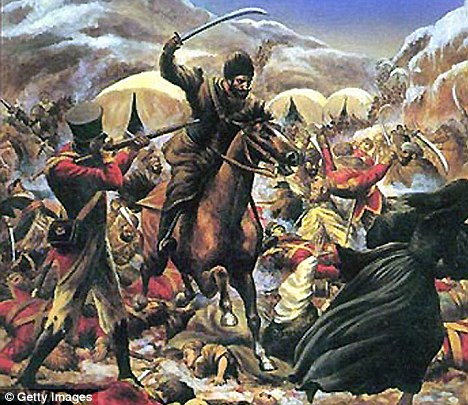
  First afghan war
Wiped out: Afghan forces defeated the British in 1812


The first British war in Afghanistan ended in humiliating defeat in 1842  when thousands of tribesmen  massacred our army.
Yesterday, in his first dispatch from the war-torn region, WILLIAM DALRYMPLE drew startling  parallels between the current conflict and the Victorian disaster.
Today he asks whether our modern commanders can ever triumph against such an implacable enemy.

The defeat of the West’s latest puppet government on the very same hill of Gandamak — where the British came to grief in 1842 — made me think, on the way back to Kabul during my  recent visit to Afghanistan, about the increasingly close parallels between the fix that Nato is in and the one faced by the British 170 years ago.  
Now, as then, the problem is not hatred of the West, but more a dislike of foreign troops swaggering around and making themselves odious to the very people they are meant to be helping.  
On the return journey, as we crawled back up the passes towards Kabul, we got stuck behind a U.S. military convoy of eight humvees and two armoured personnel carriers in full camouflage, travelling at less than 20 miles per hour.
Despite the slow speed, the troops refused to let any Afghan drivers overtake them, for fear of suicide bombers, and they fired warning shots at  anyone who attempted to do so. 
By the time we reached the top of the pass two  hours later, there were 300 vehicles behind the convoy — full of Afghans furious at being ordered  around in their own country by foreigners.
Every day, small incidents of arrogance and insensitivity such as this make the anger grow.
There has always been an absolute refusal by the Afghans to be ruled by foreigners or to accept any government perceived as being imposed on  the country from abroad. 
Now, as then, the puppet ruler installed by the West has proved inadequate to the job.
Too weak, unpopular and corrupt to provide security or development, he has been forced to turn on his puppeteers in order to retain even a vestige of legitimacy in the eyes of his people.
Recently, President Hamid Karzai has accused the U.S., the UK and the UN of orchestrating a fraud in last year’s elections.
He described Nato forces as 'an army of occupation’, and threatened to join the Taliban if Washington kept pressurising him.
The Emir Shah Shuja did the same thing in 1842, towards the end of his rule, and offered his allegiance and assistance to the insurgents who, in the end, toppled and beheaded him.
Now, as then, there have been few tangible signs of improvement under the Western-backed  regime. 
Despite the U.S. pouring approximately $80 billion (£54 billion) into Afghanistan, the roads in  Kabul are still more rutted than those in the smallest provincial towns of Pakistan.  
There is little health care — for any severe medical condition, patients have to fly to India — and a quarter of all teachers in Afghanistan are themselves illiterate. 
In many areas, district governance is almost non-existent: half the governors do not have an office, more than half have no electricity and most get $6 a month in expenses.  
Civil servants lack the most basic education and skills.  
This is largely because $76.5 billion of the $80  billion committed to the country has been spent on  military and security and the remaining $3.5 billion mostly on international consultants — some of whom are paid in excess of $1,000 a day, according to an Afghan government report.  
This has had other negative effects.
As in 1842, the presence of large numbers of well-paid foreign troops has caused the cost of food and provisions to rise and living standards to fall.
The Afghans feel they are getting poorer, not richer. There are other similarities.
Then, as now, the war effort was partially privatised: it was not so much the British Army as a corporation, the East India Company, that provided most of the troops who fought the war for Britain in 1842.
Today, the British and the Americans have subcontracted much of their security work to private companies.
When I visited the British Embassy, I found that many of the security guards at the gatehouse were not military police, but from Group 4 Security.
The U.S. security contracts offered to Blackwater/Xe and other private security forces under Dick Cheney’s ideologically driven policy of privatising war are worth many millions of dollars.
Finally, now, as then, there has been an attempt at a last show of force in order to save face before withdrawal.
As happened in 1842, it has achieved little except civilian casualties and the further alienation of the Afghans.


As one of the tribal elders from the village of Jegdalek asked me: 'How many times can they apologise for killing our innocent women and children and expect us to forgive them?
'They come, they bomb, they kill us and then they say: "Oh, sorry, we got the wrong people."
'And they keep doing that.’
The British soldiers of 1842 met the same reaction in their day.
In his diary of his time with the British Army of retribution, which laid waste to great areas of southern Afghanistan as punishment for the massacres on the retreat from Kabul earlier in the year, a young officer, Captain N. Chamberlain, reported how his troops inflicted horrible atrocities on countless Afghan civilians.
One morning he met a wounded Afghan woman dragging herself towards a stream with a water pot.
'I filled the vessel for her,’ he wrote, 'but all she said was: "Curses on the feringhees [foreigners]!"
'I continued on my way disgusted with myself, the world and above all with my cruel profession. In fact, we are nothing but licensed assassins.’
However, there are some important differences between Britain’s first defeat in Afghanistan and the current mess.
  soldiers
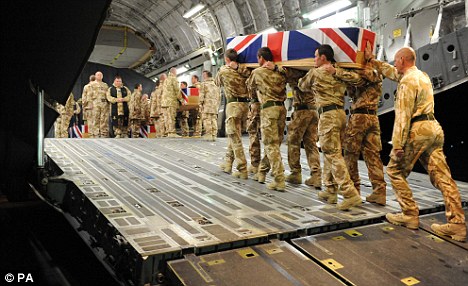
The death toll in the current Afghanistan conflict should be no surprise

In 1842, we were at least reinstalling a legitimate Afghan ruler and removing one who could genuinely be cast as an illegitimate usurper.
Shah Shuja, the chosen British puppet, was a former ruler of the Sadozai dynasty, from the leading Pashtun clan, and a grandson of the great Ahmed Shah Durrani, the first king of a united Afghanistan.
As the traveller and pioneering archaeologist Charles Masson observed: 'The Afghans had no objection to the match — they merely disliked the manner of the wooing.’
This time, we have been clumsier, and Nato has helped to install a former CIA asset described by a high-ranking UN diplomat as 'off-balance’ and 'emotional’, and whose continued 'tirade raises questions about his mental stability’.
Although Karzai is a Pashtun of the Popalzai tribe, under his watch Nato has, in effect, installed the Northern Alliance in Kabul and driven the country’s Pashtun majority out of power.
The reality of our present Afghan entanglement is that we took sides in a complex civil war, which has been running since the Seventies, siding with the north against the south, town against country, secularism against Islam, and the Tajiks against the Pashtuns.
We have installed a government and trained up an army, both of which in many ways have discriminated against the Pashtun majority, and whose top-down, highly centralised constitution allows for very little federalism or regional representation.
However, much as some Western liberals may dislike the Taliban — and they have very good reason for doing so — the truth remains that they are in many ways the authentic voice of rural Pashtun conservatism, whose views and wishes are ignored by the government in Kabul and who are still largely excluded from power.
It is hardly surprising that the Pashtuns are determined to resist the regime and that the insurgency is widely supported, especially in the Pashtun heartlands of the south and east.
Yet it is not too late to learn some lessons from the mistakes of the British in 1842.
Then, British officials in Kabul continued to send out despatches of delusional optimism as the insurgents moved ever closer to Kabul, believing there was a straightforward military solution.
They thought that if they could recruit enough Afghans to their army, they could eventually march out, leaving that regime in place — exactly the sentiment expressed by the Defence Secretary, Liam Fox, on his visit to Afghanistan last month.
In 1842, by the time they realised they had to negotiate a political solution, their power had ebbed too far and the only thing the insurgents were willing to negotiate was an unconditional surrender.
Their people will always resist invaders
Today, too, there is no easy military solution to Afghanistan: even if we proceed with the plan to equip an army of half a million troops (at the cost of roughly $2 billion a year, when the entire revenue of the Afghan government is $1.1 billion — in other words, 180 per cent of revenue), that army will never be able to guarantee security or shore up such a discredited regime.
Every day, despite the military power of the U.S.and Nato and the $25 billion so far ploughed into rebuilding the Afghan army, security gets worse and the area under government control contracts week by week.
The only answer is to negotiate a political solution while we still have enough power to do so, which in some form or other involves talking to the Taliban.
This is a course that Karzai, to his credit, is keen to pursue.
He made it clear that his peace jirga - or assembly — at the start of this month was open to any Taliban leader willing to lay down arms, and that jobs and monetary incentives would be available to former Taliban who changed their allegiance and joined the government.
It is still unclear whether the new Tory government supports this course — Barack Obama certainly opposes it.
There is something else we can still do before we pull out: leave some basic infrastructure behind, a goal we’ve notably failed to achieve in the past nine years.
Yet William Hague and Liam Fox oppose this policy — as Fox notoriously said in a newspaper interview last month: 'We are not in Afghanistan for the sake of the education policy in a broken 13th-century country.’
The Tories could do much worse than to consult their own newly elected back-bencher Rory Stewart, who served with the Black Watch and worked for the Foreign Office.
He knows much more about Afghanistan than either Fox or Hague. As Stewart wrote, shortly before he entered politics, targeted aid projects that employ Afghans can do a great deal of good, 'and we should focus on meeting the Afghan government’s request for more investment in agriculture, irrigation, energy and roads’.
In the meantime, Obama has announced that he will begin withdrawing troops in July 2011.
The start of the U.S. withdrawal is likely to begin a rush to evacuate the other Nato forces: the Dutch have announced that they will be pulling out of Uruzgan this summer, and the Canadian and Danes won’t be far behind them.
Nor will the Brits — despite assurances from Hague and Fox. A recent poll showed that 72 per cent of Britons want their troops out of Afghanistan immediately, and there is only so long any government can hold out against such strong public opinion.
Certainly, it is time to shed the idea that a pro-Western puppet regime that excludes the Pashtuns can remain in place indefinitely.
The Karzai government is crumbling before our eyes and if we delude ourselves that this is not the case, we could yet face a terrible replay of 1842.
George Lawrence, a veteran of that war, issued a prescient warning in The Times just before Britain blundered into the Second Anglo-Afghan War in the 1870s.
A new generation has arisen which, instead of profiting from the solemn lessons of the past, is willing and eager to embroil us in the affairs of that turbulent and unhappy country,’ he wrote.
Although military disasters may be avoided, an advance now, however successful from a military point of view, would not fail to turn out to be as politically useless.’
• William Dalrymple’s latest book Nine Lives: In Search Of The Sacred in Modern India won the first Asia House literary award in may and is newly published in paperback (Bloomsbury, £8.99).
His book on the First Anglo-Afghan War is planned for release in Autumn 2012. A version of this article first appeared in the New Statesman.


Link: www.dailymail.co.uk/news/article-1287531/The-Afghan-puppet-government-crumbling-
   eyes-We-talk-Taliban.html?ito=feeds-newsxml

Iraq snapshot - June 17, 2010

Iraq snapshot - June 17, 2010

The Common Ills

Thursday, June 17, 2010. Chaos and violence continue, England continues forced deportations of Iraqi refugees, Sahwa members remain targeted in Iraq, Turkey and Iran shell northern Iraq, and more.
 
In Iraq, the targeting of Sahwa continues.  Sahwa -- also known as "Awakenings" and "Sons Of Iraq" -- are Sunni (largely Sunni, though Gen David Petreaus told Congress in 2008 there were some Shi'ites as well) fighters who went on the US payroll after they agreed to stop attacking the US military in Iraq and to stop attacking their equipment.  The Sahwa then were in charge of securing their own areas.  Nouri al-Maliki was long ago supposed to have brought them into the Iraqi forces, put them on the payroll and paid them regularly.  None of that happened. 
 
Quick to feed our hungry hopes
A feast of our affections we were born anew
With open eyes we tried to make it work
And for a while the magic took
But cracks began to show as soon as things got hard
-- "Awakenings," written by Sarah McLachlan, from her new album Laws Of Illusion released this week and Sarah's on tour all summer with various artists on the traveling Lilith Fair festival
 
He was claiming in the summer of 2008 that too many of them could not be trusted. This month, he pulled Sahwa's right to carry firearms in Diayala Province. AFP reports that the latest attack on Sahwa took place today in a village outside Falluja (Al Anbar Province). Yasmine Mousa and Timothy Williams (New York Times) report it was a home invasion and the assailants used "automatic weapons" to kill Khudair Hamad al-Issawi, his wife and their three children and: "The killings occured about 10 days after responsibility for security in the village had been transferred from the Iraqi police to the Iraqi Army.  Members of the Iraqi police complianed about the transfer, arguing that they knew the area better and that they were themselves former Awakening Council members." Kim Gamel (AP) notes, "The farmer, his wife, two daughters and a son were killed, according to local police chief Brig. Gen. Mahmoud al-Issawi. Another son was wounded." Leila Fadel and Aziz Alwan (Washington Post) add, "At least 47 members of the Awakening, or Sahwa, also known as the Sons of Iraq, and their family members have been killed across the country in the past 45 days, according to a Washington Post count." 
 
The Economist notes that sectarian tensions continue to build in Iraq and that violence is rising while there is "no new government in sight" as the months drag by with no prime minister declared:
 
During this time, no new laws have been passed, no new national vision enunciated. Violence, though far less bloody than three years ago, has risen again. Worst of all, Iraq's ethno-sectarian divisions seem as deep as ever. No Iraqi equipped to appeal across them looks likely to emerge as prime minister. Indeed, though a party strongly backed by the Sunni Arab minority narrowly won the most votes and seats in the March election, the two biggest mainly Shia alliances, which came second and third, have agreed to gang up in a wider front to form a ruling coalition in which the Sunnis may not play much of a part. Since the two mainly Shia alliances teamed up only recently, it is unclear whether the constitution should treat them as the election winners and give them first shot at forming a government.
 
March 7th, Iraq concluded Parliamentary elections. Three months and two days later, still no government. 163 seats are needed to form the executive government (prime minister and council of ministers). When no single slate wins 163 seats (or possibly higher -- 163 is the number today but the Parliament added seats this election and, in four more years, they may add more which could increase the number of seats needed to form the executive government), power-sharing coalitions must be formed with other slates, parties and/or individual candidates. (Eight Parliament seats were awarded, for example, to minority candidates who represent various religious minorities in Iraq.) Ayad Allawi is the head of Iraqiya which won 91 seats in the Parliament making it the biggest seat holder. Second place went to State Of Law which Nouri al-Maliki, the current prime minister, heads. They won 89 seats. Nouri made a big show of lodging complaints and issuing allegations to distract and delay the certification of the initial results while he formed a power-sharing coalition with third place winner Iraqi National Alliance. Together, the two still lack four seats necessary (or so it is thought) to form the government.
 
Looking at the stalemate, Sami Moubayed (Middle East Online) sees a power struggle going on within the Iraqi National Alliance which doesn't involve Nouri.  He sees the power struggle between Moqtada al-Sadr (whose bloc holds the most Parliament seats in the Iraqi National Alliance) and Ammar al Hakim, "For years, Al Sadr had accused Al Hakim's father of being an Iranian stooge, because he fought alongside the Iranians during the Iran-Iraq war in the 1980s. Al Sadr has always boasted that he never fled Iraq -- not for a single day during the heyday of the Saddam regime -- while the Al Hakim family spent years in Tehran, and were bankrolled and protected by the Iranians. [. . .] Now that Abdul Aziz Al Hakim is gone, the rivalry between the two turbaned young men is stronger than ever. They come from heavyweight families that have competed for leadership of the Shiite community for decades, are both sons of legendary figures, and happen to be only two years apart in terms of age."  Hamza Hendawi and Qassim Abdul-Zahra (AP) focus on the rumors that Grand Ayatollah Ali al-Sistani is no longer standing apart from politics but has now become a partisan and, on behalf of Iran, brokering political deals including the power-sharing coalition between State Of Law and Iraqi National Alliance.
 
In other news, Liz Sly (Los Angeles Times) reports on US military 'team building efforts' between Kurdish and Arab security forces, "The deployment is a sign of how seriously U.S. commanders view the threat of an Arab-Kurdish conflict. An initiative of Army Gen. Ray T. Odierno, the commander of American troops in Iraq, the deployment of U.S., Arab and Kurdish forces was originally billed as a means to protect lightly guarded towns and villages on both sides of the line that were hit last summer by Al Qaeda in Iraq suicide bombings." But how effective these exercises can be in the best of times is unknown and certainly Kurdish forces are not experiencing the best of times as northern Iraq remains under assault by the Turkish and Iranian military. With at least two Turkish soldiers killed this week in border clashes with the PKK, the Turkish military has been bombing northern Iraq and sent in at least 800 soldiers on the ground. You really think 'team building' is going to take or this is the time?

Ivan Watson and Yesim Comert (CNN) report that Turkish officials say they've pulled their soldiers out of Iraq and that "At least 12 Turkish soldiers and sailors have been killed by increasingly bold rebel attacks over the last three weeks. But the fighting has been upstaged by Turkey's rapidly deteriorating relations with former ally Israel." The fighting has been upstaged by whom? By a media that can't cover more than one story at a time? By a feeding frenzy resulting from a bunch of chicken s**t producers and editors who are so scared of losing their jobs that they cover exactly what everyone else is covering because everyone else is covering it?

And Iran? Ranj Alaaldin (Guardian) notes:  

Over the past month Iran has continuously and relentlessly shelled villages along its border with Iraqi Kurdistan, displacing thousands, wounding many and killing one 14-year-old girl.                            
The ostensible target of these attacks is the Party for Free Life in Kurdistan, an Iranian-Kurdish militant movement known as Pejak. However, the decision to send military units across the border and establish bases (according to Kurdish sources) could be part of a broader Iranian strategy to maintain a long-term physical presence inside Kurdish territory. At the very least it is a provocative measure that Iran may justify on the basis of what it considers to be a threat posed by Pejak, but the reasons may go beyond this.      
Cross-border incursions (shelling included) have been a convenient way for neighbouring states to send a subtle message to Iraq's political actors. This includes reminding them of the limitations on the level of success they can achieve, particularly as American troops withdraw.             

The 14-year-old he's mentioning was Basouz Jabbar Agha. And the Iranian military entered Iraq and set up a base in northern Iraq. (Which Iran will no doubt insist -- if outlets produce photos -- is really on the Iranian side of the border and that Iraq is trying to advance into their territory. Similar to the 'explanations' offered when Iran attempted to seize an Iraqi oil well (last December).               

Meanwhile Middle East Newsline reports that the "U.S." military has asserted that Iraq does not intend to shut down an Iranian opposition camp." That's Camp Ashraf. US Lt Col Bob Owen is quoted stating, "United States Forces-Iraq has absolutely no control over Camp Ashraf. Camp Ashraf is in the complete hands of the government of Iraq. Camp Ashraf is not closing on July 1st." Camp Grizzly, the US base, is closing and it's said to have 'protected' the MEK residents of Camp Ashraf. Said to? The assault last July by Nouri's forces was carried out in full of the US military and they did nothing to stop it. Earlier the US government and military had promised the residents protection and led them to believe this was protection with no end-date. Whereas the Bush administration was not afraid to press on this issue, the Obama administration has never known what the hell was going on in Iraq. (Call it "Chris Hill Syndrome.") A year after the deadly assault, Camp Grizzly is closing and the US military's flacks are insisting to the press that Camp Ashraf, like a Celine Dion song, will go on.             

This in contrast to a report Press TV is carrying which has Iraq eager to crack down on the MEK. The report is filled with laughable assertions about 'terrorist operations' in Iran -- current and future -- when the MEK in Iraq is not shuttling back and forth to Iran. The Iranian government has also accused the United Kingdom of backing the MEK (under the Bush Doctrine and the Obama Doctrine, that allegation alone gives Iran the 'right' to bomb the United Kingdom). Sify reports the UK Foreign Office denies the charges. Reuters notes that Iran is also accusing "France, Sweden and other Western nations" of the same support and claiming that they arrested MEK from Iraq on Saturday in Tehran while residents of Camp Ashraf deny the charge. As all the above takes place, Benjamin Harvey (Bloomberg News) reports Turkish Prime Minister Recep Tayyip Erdogan denies that Iran is an ally of his country. The article avoids the two countries (Turkey and Iran) attacking northern Iraq and Kurdish terrorists or 'terrorists.'                       

The Kurdish region was the subject of a report issued yesterday. Human Rights Watch released "They Took Me and Told Me Nothing: Female Genital Mutilation in Iraqi Kurdistan" (link goes to HTML overview, report is in PDF format). The 80-page report documents the continued and widespread practice of FGM in the KRG. Besides the wire services, the New York Times' Namo Abdulla and Timothy Williams, CNN and BBC's Jim Muir covered the report. At Babylon & Beyond (Los Angeles Times blog), Becky Lee Katz and Asso Ahmed note:           

Nadya Khalife, a Middle East and North Africa researcher at Human Rights Watch, called for action from the Kurdish authorities. "FGM violates women's and children's rights, including their rights to life, health, and bodily integrity. It's time for the regional government to step up to the plate and take concrete actions to eliminate this harmful practice because it simply won't go away on its own," Khalife said.              
"Eradicating it in Iraqi Kurdistan will require strong and dedicated leadership on the part of the regional government, including a clear message that FGM will no longer be tolerated."              

Stephen Jones (Epoch Times) also covers the report:                          

The World Health Organization (WHO) defines FGM as comprising "all procedures that involve partial or total removal of the external female genitalia, or other injury to the female genital organs for nonmedical reasons."     
FGM is recognized internationally as a violation of the human rights of girls and women, says the WHO.        
The practice is relatively uncommon in the rest of Iraq, but has taken root in Kurdistan, where it is sometimes advocated by local Sunni Muslim clerics. 

You can also refer to Jason Van Boom's "Call for Kurdistan to Ban Female Genital Cutting" (Illume). Turning to some of the violence reported today (i
n addition to the home invasion which killed the Sahwa member and his family) . . .
 
Bombings?
 
Sahar Issa (McClatchy Newspapers) reports a Baghdad bombing targeting a US convoy with no dead or wounded reported and, dropping back to Wednesday for all that follows, a Tikrit sticky bombing which injured one person and Iran continue to shell villages in Erbil
 
Shootings?
 
Sahar Issa (McClatchy Newspapers) reports 1 man was shot dead in Baquba yesterday and anotehr wounded. Reuters notes a Kirkuk shooting which left a teacher injured.
 
Corpses?
 
Sahar Issa (McClatchy Newspapers) reports 1 corpse was discovered in Baghdad yesterday.
 
 
Naaser is an Iraqi refugee who left his country for Lebanon due to violence.  He shares his story with the Guardian and notes, "Iraq is destroyed. There is death everywhere. There was a lot of talk about democracy when the Americans first came but it is the same as it was under Saddam [Hussein].  Democracy is something we only hear about, it's something I might see when I'm an old man.  What kind of democracy is that? Killing, stealing, torturing; the old government, and the new.  There is no protection in Iraq. The fear will turn your hair grey. All I wanted to do was get out of Iraq. There is so much poverty there, I was providing for six members of my family but earning only $2 a month."
So far, Nasser hasn't been sent by to Iraq.  Others haven't been so lucky.  England and other European countries have apparently decided the best way to celebrtae World Refugee Day this year was forced deportations. Which makes you fear just how they might choose to observe November 20th (Universal Children's Day). Jim Muir (BBC News) reports that the UK, Sweden and the Netherlands deported Iraqis last week. Some of the forced returns remain in custody of Iraqi security forces at the airport still. What a welcome. Muir explains that the terminology is "enforced return" and that "Those on the list for deportation told the BBC they had already been moved to short-term holding centres ready for a flight they do not want to take." And flights that the UNHCR, Amnesty International and others have warned should not be taking place. Sam Jones (Guardian) reports:

Keith Best, the chief executive of the Medical Foundation for the Care of Victims of Torture, said the charity shared the UNHCR concern about the violence in the region, and had seen evidence of torture.                
"With the highly-volatile security situation and continuing human rights abuses in Iraq, I'd ask how the government can assure the safety of those being returned," Best said. "The Medical Foundation has provided care and treatment to a significant number of Iraqis … who have fled to Britain having been tortured in Iraq. Their health and security depends on adequate rehabilitation and stability."
The charity's own experience, he said, suggested torture still happened in Iraq. "The UK Border Agency should be identifying torture survivors … and not sending anyone back unless it can be demonstrated their human rights will be respected."

Iraqi refugee Ziad al-Dulaimi is an Iraqi refugee in England -- at least for now -- and he tells Al Jazeera that the deportations are taking place at the request of Nouri al-Maliki, according to what he's been told by British government officials:

The batch that was deported last week had difficult times, I know two of them. They called me and said they refused to leave the plane and security forces climbed on board and beat them. How can we go back to humiliation? On the other side, what are we costing the British government? Nothing. When I came to the UK five years ago, I was detained in Dover. They would not release me until I signed a paper saying I would never ask any financial help from the British government. Why can't they be patient until things are really better in Iraq?

 
Last week on Inside Story (Al Jazeera), Iraqi refugee Arevan Mohammed explained what his proceeding at the United Kingdom Border Agency (Arevan remains in England at present).  We'll excerpt this section.
 
Mike Hanna: Let me go back to Arevan Mohammed and we understand that when you had your interview about deportation, there were Iraqi members present during that interview. Is that correct?
 
Arevan Mohammed: Is that correct? Yes. Basically when I had an interview, an immigration officer denied me access to my representative -- legal representative. I pleaded with him to just let me bring my legal representative with me because you are forcing me to be interviewed with some peoples which you are putting my life in danger with.  But basically he denied that.  After when I went to the interview I basically told them I live in the UK and I would prefer the interview has to run with an English language.  The [Iraqi] Interior Minister diplomat, he became annoyed in some point in the interview and he shouted at me [. . .] "I know what I'm going to do with you by the time you're returning back home and I will put you --  I know where I will put you and how I will treat you." So don't you think that's a threat?  In the middle of a democracy, like the country of UK, Iraqi diplomats threatening me by the time I will return back to Iraq, he's simply telling me, I will put you in hidden prison or secret prison and I will kill you later on."
 

Meanwhile Helsingin Sanomat reports that they've learned Air Finland is transporting the refugees and:

The Finnish airline Air Finland Ltd has its head office in the Helsinki-Vantaa Airport complex.
More than half of the airline is owned by Berling Capital Ltd., belonging to CEO Esa Karppinen and his family, while 45 per cent of the airline is owned by its executive management.
In 2009, Air Finland posted a sales profit of more than EUR 2 million.
In the current year, the airline has started the sales of package tours to a number of destinations, including Turkey.
The airline's package tours use the same planes as those used for the repatriation of asylum-seekers.

Iraq is a failed state as the Fund for Peace's report [PDF format warning] "Iraq On The Edge: Iraq Report #10 2009 - 2010" makes clear (see yesterday's snapshot for overview). And that's what Iraqis are being sent back to.
 
 
World Refugee Day is this Sunday (June 20th).  Yesterday, Mike Hanna (Inside Story, Al Jazeera) spoke with Stop Deportations To Iraq's Richard Whittle, Euro Council On Refugees and Exiles' Bjarte Vandvik and UNHCR spokesperson Adrian Edwards. We'll excerpt the following:
 
Richard Whittel: Iraq continues to suffer from the consequences of war. Iraqi refugees leaving that and going to, for examples, countries like the UK.  When they get to the UK, they're then faced with anti-immigrant -- I mean, hysteria is a fair word for it -- encouraged by governments and the right-wing media which is then leading to people being forcibly deported from the UK.  For example, last week there was a flight from the UK and Sweden to Baghdad with 50 people on.  There's another one scheduled for tomorrow back to Iraq which continues to suffer from the insecurity and violence caused by the war. [. . .] And a further compliction of this is that, for example, 13 of the people who were deported on the flight, I mentioned, last week from the UK and Sweden to Baghdad, are currently still in detention in Baghdad Airport because the authorities there say they do not have the right i.d., they do not have proof they're Iraqis which begs the question -- Well, it begs yet another question, why they were sent back there in the first place?
 
Mike Hanna: , many of those Iraqi refugees from Europe Does this point to the necessity for some kind of regional agreement? Some kind of standards that can be observed by the host countries in terms of when refugees should be returned and why?
 
Bjarte Vandvik: Well I think it's a very important point you're raising and the colleague in London as well because with the Iraqi situation -- which was the biggest refugee crisis in the Middle East since the Second World War  -- we saw that a lot of European governments were actually shying away from their responsibility.  On the one hand, some of the same states that were so eager to create peace, democracy, human rights in Iraq that they sent soldiers there, when people were fleeing because there was no peace and human rights were then turning their backs to them and saying, "Well go somewhere else."  I think there is a very unfortunate and very politically hostile environment in many European states today when it comes to refugees in particular. And I think we, as Europeans, must really take a good look at ourselves when it comes to contributing as a very privileged part of the world to finding solutions for the world's refugees. We can't just build a wall around our part of the world and then pretend that these problems will disappear because they won't and we need to play a more active role -- both in helping countries in the region such as, in this example, Iraq and Jordan and also show by example that it's important to uphold the international standards, to respect human rights and that means the same things that European Union is built on to-to avoid persecution and to give shelter to people that are being persecuted. That is under threat in Europe today, I'm afraid.


Monday April 5th, WikiLeaks released US military video of a July 12, 2007 assault in Iraq. 12 people were killed in the assault including two Reuters journalists Namie Noor-Eldeen and Saeed Chmagh. Monday June 7th, the US military announced that they had arrested Bradley Manning and he stood accused of being the leaker of the video. Philip Shenon (Daily Beast) reported Friday that the US government is attempting to track down WikiLeaks' Julian Assange. Mike Gogulski has started a website entitled Help Bradley Manning. Yesterday, Shenon was interviewed by Deborah Amos (NPR's Morning Edition) on the news that WikiLeaks is planning to release video of a US assault on Afghan civilians.
 
AMOS: Let's talk for a minute about this second video. There are reports about what's on it. Can you tell us?
 
Mr. SHENON: The first video that was released involved an American airstrike in Baghdad in 2007. The one Assange is now talking about is an airstrike in Afghanistan that occurred last year that is apparently it is believed to have been, in terms of civilian casualties, the most lethal American attack in Afghanistan since the war began.
 
AMOS: So has anybody seen this second video of the aftermath of a bombing in Afghanistan?
 
Mr. SHENON: To the best of my knowledge, it's only been seen within the Defense Department. This will be the first time that it's had any sort of public viewing.
 
AMOS: And how do we know that this is the same one?
 
Mr. SHENON: Well, we only have at this point Assange's claims that he has it, and we also have these Internet chat logs in which the young soldier in Iraq boasts of having stolen that video.
 
Deborah Amos is the author of Eclipse of the Sunnis: Power, Exile, and Upheaval in the Middle East.  IPA (Institute for Public Accuracy) issued the following today [minus link to Wired whom we have not linked to on this story for obvious reasons]:
 
The British Guardian reports: "The whistleblowing website WikiLeaks says it plans to release a secret military video of one of the deadliest U.S. air strikes in Afghanistan in which scores of children are believed to have been killed."

In April,
Wikileaks released the "Collateral Murder" video showing U.S. soldiers in Iraq killing civilians including a Reuters photographer and then shooting at people, including children, in a van attempting to rescue the wounded.

The following statement was released today by Coleen Rowley, an FBI whistleblower who was one of Time Magazine's people of the year in 2002; Ray McGovern, CIA analyst for 27 years; and Daniel Ellsberg, who leaked the Pentagon Papers (top-secret government documents that showed a pattern of governmental deceit about the Vietnam War):

"Today, Washington is trying to shut down what it clearly regards as the most effective and dangerous purveyor of embarrassing information -- Wikileaks, a self-styled global resource for whistleblowers. It is a safe bet that NSA, CIA, FBI and other agencies have been instructed to do all possible to make an example of Wikileaks leader, Australian-born Julian Assange, and his colleagues. Much is at stake -- for both Pentagon and freedom of the press.

"Those who own and operate the corporate media face a distasteful dilemma, both in terms of business decision and of conscience. They must choose between the easier but soulless task of transcribing government press releases, on the one hand; or, on the other, following Wikileaks into the 21st century by adapting high-tech methods to protect sources while acquiring authentic stories unadulterated by government pressure, real or perceived.

"Deference to the government seems largely responsible for the failure to explore the implications of particularly riveting reportage that gets millions of hits on the Web but has been, up to now, largely ignored by mainstream media. The best recent example of this is the gun-barrel video showing a merciless turkey-shoot of Baghdad civilians by helicopter gunship-borne U.S. soldiers on July 12, 2007. Like the humiliating and graphic but actual photos of Abu Ghraib, the publication of which Pullitzer-prize winning Seymour Hersh repeatedly defended as necessary to the story of Iraqi prisoner abuse, such raw footage is essential to people's understanding of what is happening. Like Daniel Ellsberg's copying of 7,000 pages of the 'Pentagon Papers,' such whistleblowers are a great means of exposing the lies upon which the current wars are based.

"Assange went public this week with an email announcement that Wikileaks is preparing to release a classified Pentagon video of a U.S. airstrike in Afghanistan in May 2009, which left as many as 140 civilians dead -- most of them children and teenagers. He added that Wikileaks has 'a lot of other material that exposes human rights abuses by the United States government.'

"Wikileaks has also published a secret U.S. Army report of March 2008 evaluating the threat from Wikileaks itself and possible U.S. countermeasures against it. This will undoubtedly prompt American officials to redouble efforts to find Assange and to prevent Wikileaks from posting additional information they have classified to avoid embarrassment.

"Americans have a right to know what is being done in our name, and how important it is to protect members of the now-fledgling Fifth Estate so that it can continue to provide information shunned or distorted.

"Assange ended his email with an unabashed appeal for donations for his website. 'Please donate ... and encourage all your friends to follow the example you set; after all, courage is contagious.' His words sounded a bit like those of Edmund Burke: 'When bad men combine, the good must associate; else they will fall one by one, an unpitied sacrifice in a contemptible struggle.'

"For the good to associate effectively, they need to know what is going on. It's our hope the old Fourth Estate press will recall the good and high-calling that Burke, Jefferson and other leaders of democracy have extolled through the centuries and catch some of that 'contagious courage'."

See on
Ellsberg.net: "Daniel Ellsberg Fears WikiLeaks Founder Julian Assange's Life In Danger"; (on MSNBC) and today on Democracy Now.

Available for interviews:
RAY McGOVERN
McGovern was a CIA analyst for 27 years.
COLEEN ROWLEY
Rowley, an FBI whistleblower, was named one of Time Magazine's people of the year in 2002. She recently co-wrote the piece "Wikileak Case Echoes Pentagon Papers."

[. . .]

The
New York Times reports today: "Iceland's Parliament, the Althing, voted unanimously in favor of a package of legislation aimed at making the country a haven for freedom of expression by offering legal protection to whistle-blower Web sites like WikiLeaks, which helped to craft the proposal."              


For more information, contact at the Institute for Public Accuracy:
Sam Husseini, (202) 347-0020; or David Zupan, (541) 484-9167


AMY GOODMAN: Daniel Ellsberg, let's go to you. The reports are that the Pentagon is searching for Julian Assange. They have already arrested the soldier in intelligence who says he was responsible for the release of the videotape. He's been held for three weeks without charge. What are your comments on this case?

 
DANIEL ELLSBERG: Well, of course, I was in the position of Bradley Manning, having decided that I was in the possession of information that the public deserved to know and the Congress deserved and it had been wrongfully withheld. And at my own risk, I released it, just as Manning has done. At the same time I was in the position of Julian Assange this week, eluding authorities while I was preparing to put out further secrets. Assange is more in the position of the New York Times and the Post and seventeen other newspapers who received classified information from me. But in my case, as I was putting it out to them, it was essential for me not to be apprehended, so that I could get those copies to them. I hope that Julian stays out long enough to give us, for example, the tape of the other massacre in Afghanistan, the Garani massacre, which allegedly killed some 140 civilians.
JUAN GONZALEZ: Well, Daniel Ellsberg, this whole issue of the 260,000 classified documents that include quite a bit of, apparently, cable communication between State Department officials and diplomats, what's the potential here in terms of --you're familiar with cable traffic between diplomats. What is the potential embarrassment that the United States faces here?

 
DANIEL ELLSBERG: Well, their potential embarrassment is foreshadowed by the leak of the cables from Lieutenant General Eikenberry, our emissary in Kabul, the ambassador to Kabul, whose cables were leaked by some patriot -- and I say that with consideration here -- someone who properly put out those cables showing that Eikenberry regarded the man to whom he was accredited as irredeemably corrupt, an inappropriate partner for pacification who held no promise of supporting any progress from our point of view there ever, and who was deeply involved in the drug trade, etc., etc. Since he was someone who was soon to be feted by the President personally in the Oval Office and given a tour of garden spots in Georgetown by Secretary of State Clinton, it was, of course, embarrassing to have cables from our ambassador there calling him a drug-dealing crook who had stolen the election and was totally incompetent and offered no possibility of progress.  That kind of embarrassment could appear with our relations with most of the dictatorial regimes we've been supporting in the Middle East for years, as in Saudi Arabia, Egypt and elsewhere. Any candid assessments like that would, of course -- would actually recommend the realism to us of our own officials, that they their feet on the ground, even while they're lying to us about who it is they're supporting and what they hope to achieve.
 
Lastly (and I'll try to start with it in tomorrow's snapshot), we'll note this by Iraq Veterans Against the War's Adrienne Kinne:  
 
The US Social Forum is taking place in Detroit, MI from June 22-26, 2010 and IVAW will be there!                           
1) IVAW will be leading a GI Resistance Workshop. Iraq and Afghanistan War Resisters will testify to the struggle and value of resisting militarism and discuss what support is needed to build the GI Movement. http://organize.ussf2010.org/ws/building-gi-resistance-movement                                                      
2) Building a Military Resistance Movement: Veterans, Service Members & Allies Organizing Together. This workshop, lead by IVAW and Civilian- Soldier Alliance will be an introductory training on supporting war resisters and being a strong and accountable ally to veterans and service-members organizing for change.                http://organize.ussf2010.org/ws/building-military-resistance-movement-ve...   
3) Veterans and Military Families: Impact of the Wars; Impact on Movements. An exploration of how veterans and military families use their unique voices and perspectives to end wars and promote peace and social change.                  http://organize.ussf2010.org/ws/veterans-and-military-families-impact-wa...              

Link: thecommonills.blogspot.com/2010/06/iraq-snapshot_17.html